
A ship accident rarely tells its full story at the moment it happens.
A collision may last only a few seconds. A grounding can result from a series of decisions made minutes earlier. A loss of propulsion may begin with a technical problem that is not immediately obvious to the people operating the vessel.
Afterward, investigators have to work backward.
They may have damaged equipment, photographs, witness statements, weather information, maintenance records, navigation information, and electronic data. The challenge is to bring these different pieces together into a reliable sequence of events.
Ship records are particularly useful because they can preserve information created while the vessel was actually operating. Voyage Data Recorders, navigation systems, Automatic Identification Systems, electronic charts, machinery monitoring equipment, and communications systems can all contribute to an accident reconstruction.
The objective is not simply to collect as much information as possible. It is to determine what the available evidence can establish, what remains uncertain, and how different pieces of evidence relate to one another.
Why Reconstructing an Accident Is Difficult
Marine accidents often happen in dynamic environments.
A vessel may be moving through changing weather, navigating around other traffic, operating near a coastline, or responding to equipment problems. Several actions can take place almost simultaneously.
Human recollection can also vary.
Crew members may remember what they saw or heard differently, particularly when an unexpected event requires an immediate response. A witness may accurately remember a general sequence while being uncertain about exact timing.
This is where recorded information can provide valuable context.
Instead of relying only on recollection, investigators can examine records created during the voyage and compare them with what people later reported.
The Voyage Data Recorder
One of the most important sources of electronic evidence on applicable commercial vessels is the Voyage Data Recorder, or VDR.
The VDR is designed to preserve selected information about a vessel's position, movement, physical status, command, and control. Depending on the system and vessel configuration, this can include navigation information, bridge audio, communications, and information from connected shipboard equipment.
The International Maritime Organization recognizes VDR information as an important resource for marine casualty investigations.
Its greatest value during reconstruction is chronology.
Investigators can examine what the vessel was recording before an accident, during the critical period, and immediately afterward. This can help establish a timeline that can then be compared with physical and testimonial evidence.
Building a Timeline From Ship Records
Consider a hypothetical collision between two vessels.
After the accident, the people involved may provide different accounts of the vessels' movements. One person may remember a course alteration occurring earlier, while another may recall it happening later.
Investigators can examine available navigation and voyage records to establish a more detailed sequence.
Questions may include:
- Where was the vessel at specific times?
- What heading was it maintaining?
- How was its speed changing?
- When did a course alteration occur?
- What communications took place?
- Were alarms or equipment changes recorded?
- What happened immediately before and after contact?
The answers do not necessarily solve the investigation by themselves. Instead, they create a framework for comparing different sources.
That framework is often the foundation of accident reconstruction.
AIS and Other Navigation Information
Automatic Identification System data can provide another useful perspective on vessel movements.
Depending on the available records, AIS can contain information such as vessel identity, position, course, speed, and navigational status. Investigators may use these records to examine the relative movement of vessels involved in an incident.
Electronic navigation systems can provide additional geographical context.
For example, after a grounding, investigators may compare recorded positions with the location of navigational hazards, channels, charted depths, and other relevant features.
The information becomes more meaningful when it is considered alongside the physical condition of the vessel.
A damaged hull can establish that contact occurred. Navigation records may help establish where the vessel was moving before that contact.
Bridge Communications Can Add Context
Not every important event appears as a position or speed value.
People communicate throughout a voyage. Bridge teams give instructions, discuss developing situations, communicate with other vessels, and respond to alarms or changing conditions.
Where appropriate bridge audio is available through a VDR, investigators can examine communications surrounding an accident.
Suppose a vessel changes course shortly before a collision. Navigation data may establish when the alteration occurred, while bridge audio may provide information about communications taking place around the same time.
Audio evidence also requires careful interpretation. Background noise, microphone location, overlapping conversations, and recording quality can affect what can be understood.
The record should therefore be treated as evidence that requires evaluation rather than as a perfect representation of every conversation on the bridge.
Machinery Records Can Explain Technical Events
A ship's records can extend beyond navigation.
Modern vessels contain systems that monitor engines, propulsion equipment, generators, steering systems, alarms, and other machinery.
When an accident involves a suspected technical problem, these records can become important.
Imagine a vessel that suddenly loses propulsion while navigating in confined waters. Investigators may need to determine whether the machinery problem occurred before the vessel's movement changed or whether the equipment problem followed another event.
The sequence matters.
A machinery alarm, engine parameter, navigation change, and bridge communication can sometimes be compared on a common timeline.
This does not automatically establish why a failure occurred. It helps investigators identify when particular events were recorded and determine what additional evidence may be needed.
Physical Damage Still Matters
Electronic records cannot replace examination of the vessel itself.
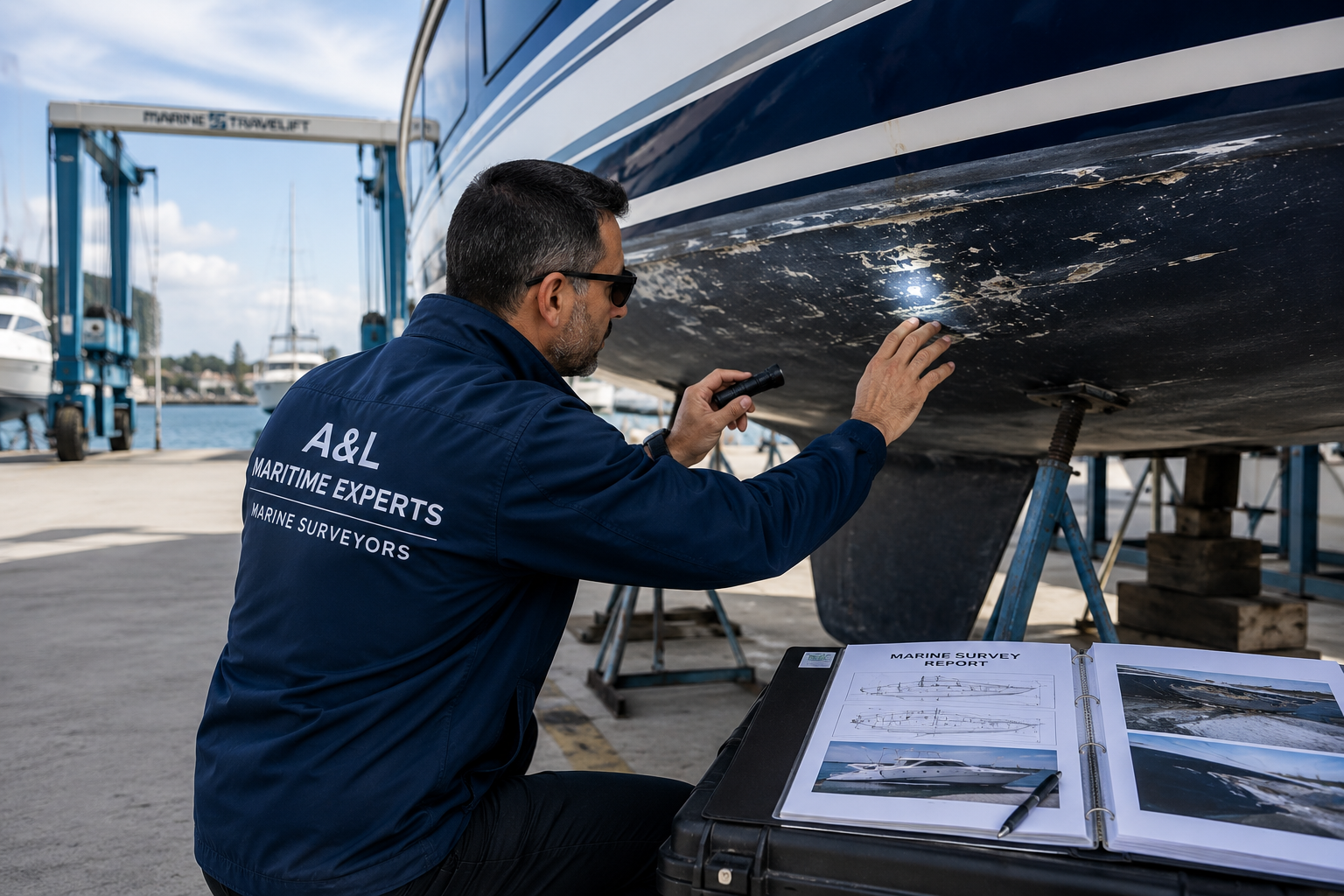
After a collision, investigators may document dents, fractures, paint transfer, damaged fittings, structural deformation, or other physical findings. After a grounding, underwater components may show contact damage.
These observations can be compared with the recorded voyage information.
For example, if a vessel has concentrated damage to its bow, investigators may examine the vessel's heading and movement around the time of the incident. If another vessel was involved, corresponding damage and available records from that vessel may also be considered.
This process helps connect digital evidence with the physical world.
The purpose is not to force the evidence to fit a predetermined explanation. Instead, investigators can ask whether the physical findings are consistent with the recorded sequence.
Photographs Preserve the Condition of the Vessel
Photographs are another important part of reconstruction.
A damaged vessel may be repaired or moved shortly after an accident. Salvage operations may change the scene, while emergency work can alter or remove damaged components.
Early photographs can therefore preserve information that may no longer be visible during a later inspection.
Wide photographs can establish the overall condition and location of damage. Close-up photographs can document fractures, deformation, markings, and individual components.
When photographs are combined with ship records, investigators can connect a physical condition with a particular point in the timeline.
Ship Records Need Context
Digital records can look precise, but precision on a screen does not necessarily mean that the information is complete or error-free.
Shipboard systems depend on sensors, inputs, configurations, communications between equipment, and recording processes. A problem with an input can affect what appears in a record.
Time synchronization can also matter.
If investigators compare information from several systems, they need to understand how the timestamps were generated and whether the systems were synchronized.
A difference between two records does not automatically mean that one is unreliable. The discrepancy may have a technical explanation.
This is why technical knowledge is important when reconstructing an accident from electronic evidence.
Preserving Evidence After an Accident
The period immediately following an accident can be critical.
A vessel may be moved to another location, repaired, cleaned, salvaged, or returned to operation. Electronic systems may continue recording information after the event.
Relevant records should therefore be identified and preserved as soon as practical.
The handling process also matters. Investigators should be able to establish what information was collected, how it was extracted, and whether anything could have affected its integrity.
This principle applies to both digital and physical evidence.
A record is more useful when its origin, timing, and handling can be clearly documented.
When Records and Witness Accounts Differ
One of the most useful functions of ship records is that they can reveal differences between recollections and recorded information.
Suppose a crew member remembers that an alarm sounded before a course alteration. An electronic record may show the timing differently.
That does not automatically mean the person's account is false.
People experience accidents under stressful conditions, and memory can be affected by the speed and complexity of an event. Electronic systems can also have technical limitations.
The difference therefore becomes something to investigate.
By examining the relevant equipment, timestamps, communications, maintenance information, and other evidence, investigators can determine whether the discrepancy has an identifiable explanation.
Reconstructing the Events Step by Step
A sound accident reconstruction generally works from evidence rather than assumptions.
Investigators can begin by identifying the known facts.
What physical damage exists?
What information was recorded?
Which systems were operating?
What do the navigation records show?
What communications are available?
What were the environmental conditions?
What do witnesses remember?
From there, the evidence can be organized chronologically.
The investigator can then compare individual events and look for relationships. A machinery alarm may precede a change in vessel movement. A communication may occur shortly before a maneuver. Physical damage may be consistent with the vessel's recorded position and heading.
When evidence aligns, confidence in that portion of the sequence can increase. When it does not, the uncertainty should be identified rather than hidden.
This is what allows investigators to reconstruct the events without relying solely on one person's interpretation.
Digital Evidence Is Part of a Larger Investigation
There is a temptation to view modern ship records as a complete answer to an accident.
They are not.
A VDR, AIS record, electronic chart, machinery log, photograph, or witness statement represents only one part of the available evidence.
The strongest reconstruction usually comes from comparing multiple sources.
Digital information can establish timing and movement. Physical inspection can reveal the consequences of an impact or failure. Witnesses can provide observations and context. Maintenance records can help establish the vessel's condition before the accident.
Together, these sources can provide a more complete picture.
Turning a Collection of Records Into an Explanation
The real value of ship records is not simply that they contain information. It is that they can help investigators connect separate observations into a chronological sequence.
A marine accident may initially appear to be a confusing collection of damage, statements, alarms, communications, and navigation information.
Careful analysis can organize those pieces.
The result may show what can be established with confidence, what remains uncertain, and which questions require additional investigation.
That approach is useful well beyond maritime work. It reflects a broader principle of evidence-based problem solving: complex events become easier to understand when independent records are preserved, organized, compared, and interpreted in context.
For marine accidents, ship records provide an important digital window into events that may otherwise be difficult to revisit. When combined with physical evidence and careful technical analysis, they can help transform a brief and confusing incident into a sequence that can be examined step by step.