
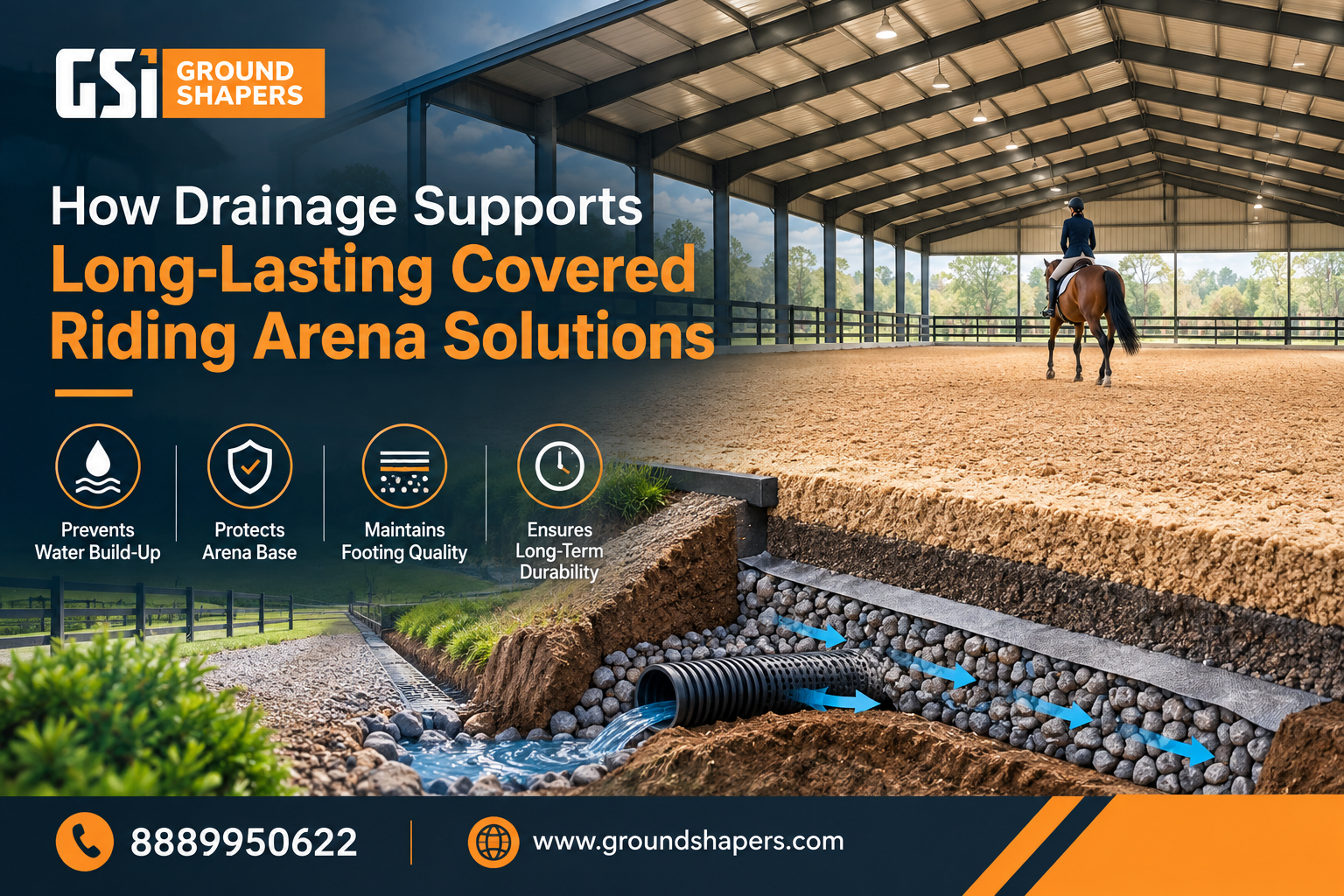
A covered riding arena provides riders and horses with a dependable space for training, lessons, exercise, and year-round activities. While the roof protects the arena from direct rain and harsh weather, it does not eliminate the need for effective water management. Moisture can still enter from the sides, move through the surrounding ground, or collect beneath the riding surface.
That is why drainage should be considered an essential part of covered riding arena solutions. A well-designed drainage system helps protect the arena base, preserve footing quality, reduce maintenance requirements, and support a safer environment for both horses and riders.
Why Drainage Matters in a Covered Arena
It is easy to assume that a roof keeps an arena completely dry. In reality, water can reach the arena through several routes. Wind-driven rain may enter from open sides, groundwater can move upward or sideways, and runoff from surrounding land may travel toward the building.
Without adequate drainage, moisture can accumulate beneath or around the riding surface. Over time, this may lead to soft areas, standing water, erosion, and deterioration of the arena foundation.
Effective drainage gives water a controlled path away from important structural and riding areas. This helps maintain a more consistent arena environment throughout changing weather conditions.
Protecting the Arena Base
The base is one of the most important components of a riding arena. It supports the footing and contributes significantly to the overall stability of the surface.
Excess moisture can weaken poorly protected base materials. Repeated cycles of saturation and drying may cause movement, rutting, or uneven areas. In cold climates, trapped water can also freeze and expand, potentially affecting the stability of the surface.
Professional covered riding arena solutions should therefore consider drainage before the footing is installed. Proper grading, suitable base materials, and strategically placed drainage systems can work together to move excess water away from the arena.
Supporting Consistent Footing
Good footing needs the right balance of moisture. Too much water can make the surface heavy, muddy, or unstable, while excessive dryness can create dust and reduce surface cohesion.
Drainage does not simply mean removing every trace of moisture. Instead, the objective is to manage water so that the arena surface remains predictable and functional.
A properly designed drainage system can help prevent water from becoming trapped below the footing. This contributes to a more consistent riding surface and can reduce the frequency of major footing corrections.
Managing Water Around the Building
Drainage should extend beyond the riding surface itself. Water management around the perimeter of a covered arena is equally important.
Roof runoff, for example, can create concentrated flows along the edges of the building. If that water is allowed to collect near the arena foundation, it can contribute to erosion and excessive moisture.
Depending on the site, solutions may include:
- Properly graded ground around the building
- Gutters and downspouts
- Perimeter drains
- Swales or drainage channels
- Perforated drainage pipes
- Suitable filter materials
- Carefully selected base aggregates
The appropriate combination depends on the site's soil, slope, climate, groundwater conditions, and arena design.
Site Assessment Comes First
Every property has different drainage requirements. A system that works well on one site may not be appropriate for another.
Before construction begins, contractors should evaluate the site's natural slope, soil characteristics, existing water movement, and potential runoff sources. Understanding these conditions helps determine where water is likely to accumulate and how it should be redirected.
A site with heavy clay soil, for example, may require a different approach from a property with naturally free-draining sandy soil. Similarly, an arena constructed on a sloping site may require careful interception of water moving downhill toward the building.
This type of planning is an important part of developing durable covered riding arena solutions.
Drainage and Long-Term Maintenance
A good drainage system can make ongoing arena maintenance more manageable. When water is properly controlled, owners may experience fewer problems with erosion, saturated footing, and uneven areas.
However, drainage systems still require periodic inspection. Gutters should be kept clear, drainage outlets should be checked, and surface grading should be monitored. Sediment and debris can gradually reduce the effectiveness of certain drainage components.
Routine maintenance is much easier when drainage has been designed with accessibility and long-term performance in mind.
Choosing Materials for Better Performance
Drainage performance depends not only on the design but also on the materials used. Clean, appropriately sized aggregate can help create drainage pathways beneath the riding surface. Drainage pipes, filter fabrics, and other components should be selected according to the project's site conditions and engineering requirements.
The objective is to create a stable system that can handle expected water volumes without becoming blocked or damaged.
Quality materials also need to be installed correctly. Poor compaction, incorrect slopes, or inadequate separation between soil and drainage materials can reduce system performance.
Building for Different Climates
Climate is another important consideration when designing covered riding arena solutions. Areas that receive frequent rainfall may require greater capacity for moving water away from the arena. Regions with freezing temperatures need designs that account for frost and seasonal ground movement.
In drier climates, drainage remains important because occasional heavy storms can produce substantial runoff in a short period. Designing for both normal and unusually wet conditions can help improve long-term reliability.
Final Thoughts
A covered arena protects riders and horses from many weather conditions, but the roof is only one part of a successful facility. Effective drainage protects the foundation, supports consistent footing, reduces water-related damage, and contributes to easier long-term maintenance. When planning covered riding arena solutions, drainage should be addressed during the earliest stages of site preparation and construction rather than treated as an afterthought. A thoughtful combination of grading, drainage infrastructure, suitable materials, and regular maintenance can help create a dependable riding environment designed for years of use. For equestrian facility owners, investing in proper water management is an important step toward protecting the performance, durability, and usability of a covered riding arena.