
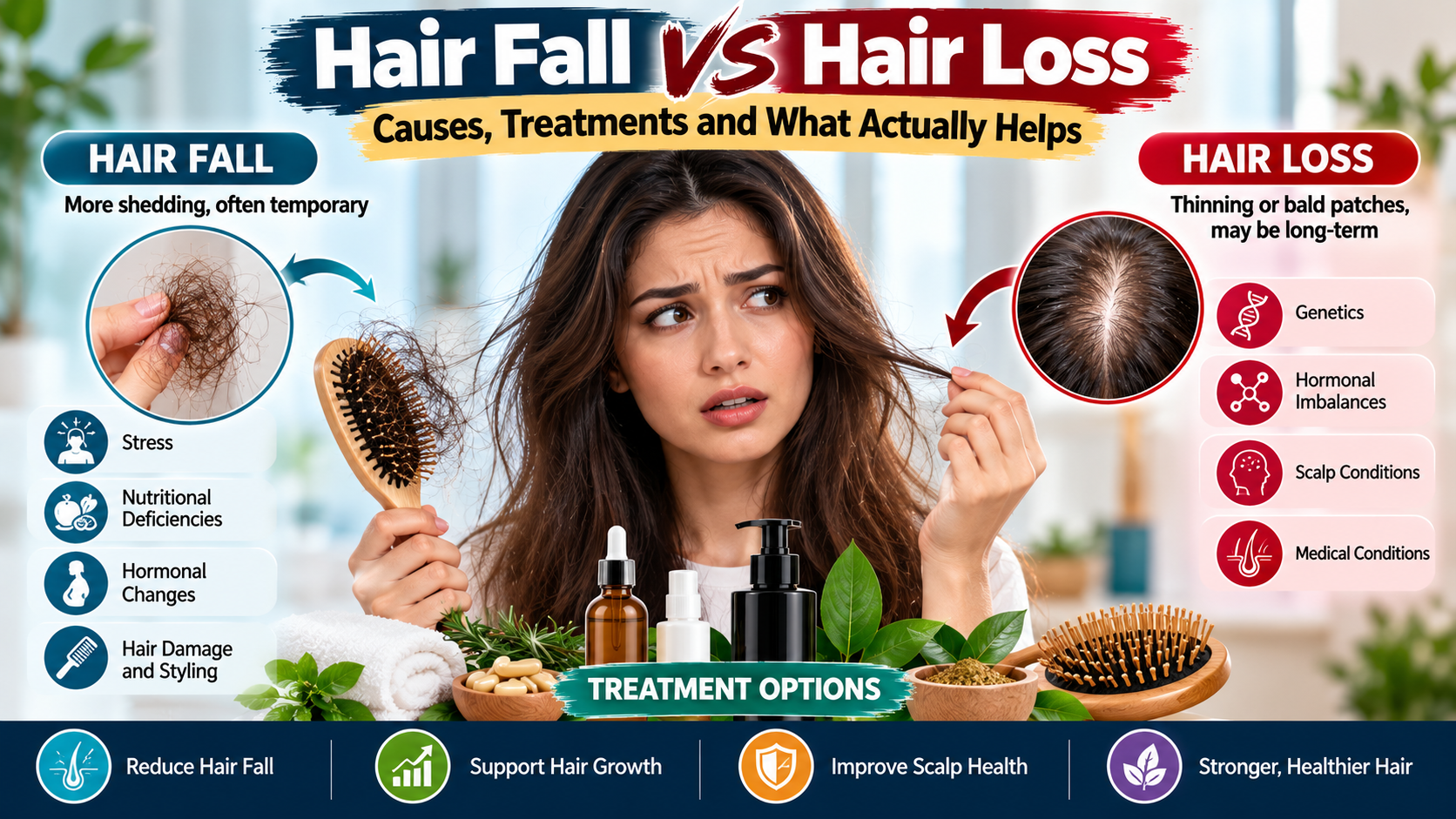
Hair fall is a common concern affecting people of different ages and hair types. Finding extra strands on your pillow in the shower or on your hairbrush can be worrying especially when you notice your hair becoming thinner over time.
However not every instance of hair shedding indicates permanent hair loss. Some shedding is a normal part of the hair growth cycle while other forms of hair loss may be associated with genetics, hormonal changes, nutritional deficiencies, medical conditions or hair-care practices.
Understanding the difference is essential before choosing a hair loss treatment. A product that helps one person may not address another person's underlying condition.
Whether you are researching hair fall treatment, exploring hair loss solutions or looking for ways to improve your scalp health this guide explains the common causes of hair loss available treatments and how to make informed decisions about your hair-care routine.
Hair Shedding vs Hair Loss: What's the Difference?
Although people often use the terms interchangeably hair shedding and hair loss are not exactly the same.
Hair naturally goes through a growth cycle that includes growing, resting and shedding. According to the American Academy of Dermatology (AAD) losing approximately 50–100 hairs daily is normal.
Excessive hair shedding occurs when more hairs than usual enter the shedding phase. This condition is commonly called telogen effluvium.
Hair loss or alopecia is a broader term that includes conditions in which hair growth is disrupted hair follicles shrink or hair stops growing in particular areas. Some people experience both shedding and hair loss simultaneously.
| Hair shedding | Hair loss |
| Often involves increased daily shedding | May involve progressive thinning or bald patches |
| Can follow illness, childbirth or stress | Can result from genetics autoimmune disease or other conditions |
| Frequently temporary | May be temporary or permanent |
| May resolve after the trigger improves | Some types require medical treatment |
Recognizing these differences can help you avoid purchasing unnecessary hair loss products.
Common Causes of Hair Loss
Identifying the underlying cause is one of the most important steps in choosing an appropriate treatment. Different causes require different approaches.
Genetics
Hereditary hair loss medically known as androgenetic alopecia, is a common cause of progressive thinning.
In men it often appears as a receding hairline or thinning around the crown. In women it may present as a widening part or gradual thinning across the scalp.
Genetic factors can cause hair follicles to become progressively smaller producing finer and shorter strands.
Early diagnosis may help preserve existing hair through appropriate treatment.
Hormonal Changes
Hormonal changes can affect the hair growth cycle.
Some people experience increased shedding after childbirth, while others notice changes associated with menopause or thyroid disorders.
Hormonal influences may also contribute to pattern hair loss.
Because different hormonal conditions require different treatments, identifying the underlying issue is more useful than automatically choosing a product marketed for hormonal hair loss.
Stress
Physical and emotional stress can trigger excessive hair shedding.
Common triggers include major illness, surgery, significant weight loss and substantial emotional stress.
Shedding may become noticeable several months after the triggering event.
Fortunately, stress-related shedding often improves once the underlying trigger resolves. However persistent stress or other contributing conditions may prolong the problem.
Nutritional Deficiencies
Adequate nutrition supports normal hair growth.
Deficiencies involving iron, protein or certain other nutrients can contribute to hair problems.
However taking supplements without identifying a deficiency is not necessarily helpful.
If a healthcare professional suspects a nutritional cause they may recommend appropriate testing before suggesting dietary changes or supplements.
Scalp Conditions
The health of your scalp can influence hair growth.
Certain inflammatory conditions, infections and autoimmune disorders can contribute to shedding or hair loss.
For example scalp ringworm can cause hair loss and may require medical treatment.
Alopecia areata is an autoimmune condition that can produce distinct bald patches.
These conditions cannot reliably be treated with ordinary cosmetic shampoos or serums alone.
Hair Damage and Traction
Hair-care practices can also contribute to visible thinning.
Repeatedly wearing tight hairstyles may place excessive tension on hair follicles. Over time this can cause traction alopecia.
Excessive heat styling, aggressive brushing and chemical processing can also damage hair strands.
Although breakage is different from hair loss at the follicle both can make hair appear thinner.
Reducing damaging practices is an important part of maintaining healthy-looking hair.
When Should You Take Hair Loss Seriously?
Occasional shedding is normal. However certain changes deserve closer attention.
Consider seeking professional advice if you notice:
- Sudden or unusually heavy shedding.
- Distinct bald patches.
- A progressively receding hairline.
- A noticeably widening hair part.
- Persistent thinning over several months.
- Hair loss accompanied by scalp pain, redness, or inflammation.
- Hair loss involving the eyebrows or other body areas.
Some conditions can lead to permanent hair loss if the follicles become damaged. Early assessment can therefore be important.
Common Hair Loss Treatment Options
There is no single hair loss treatment that works for everyone.
Treatment depends on the underlying cause the extent of hair loss medical history and individual circumstances.
Some treatments target hereditary hair loss, while others address inflammation, nutritional deficiencies or temporary shedding.
The following categories explain commonly discussed approaches.
Minoxidil
Minoxidil is a medication used to treat certain types of hair loss particularly pattern hair loss.
Topical minoxidil is available in different formulations including solutions and foams.
Research has shown that it can help some people reduce further hair loss and encourage regrowth.
However results vary. Some individuals experience noticeable improvement while others respond less significantly.
Treatment generally requires consistent use over several months and its benefits may gradually disappear after discontinuation.
Possible side effects include scalp irritation and itching.
People who are pregnant, breastfeeding, have underlying medical conditions or are considering oral minoxidil should obtain individualized medical advice before use.
DHT-Related Approaches
Dihydrotestosterone commonly called DHT plays a role in androgenetic alopecia.
In genetically susceptible individuals DHT contributes to the gradual miniaturization of certain hair follicles.
Some medical treatments address this process.
Finasteride for example reduces DHT production and is prescribed for certain forms of pattern hair loss.
It is not suitable for everyone and can cause adverse effects including sexual side effects and mood-related symptoms. Finasteride must not be used during pregnancy.
A healthcare professional should assess whether this type of treatment is appropriate.
Hair Growth Serums
Hair growth serums are widely available in the beauty and personal-care market.
These products may contain ingredients such as caffeine, peptides, botanical extracts or conditioning agents.
However their effectiveness depends on the formulation and the evidence supporting the specific product.
It is important to distinguish between cosmetic serums that improve hair appearance and medically evaluated treatments intended to address particular forms of hair loss.
A serum may improve softness, manageability, or the appearance of hair without necessarily stimulating new follicular growth.
Consumers should therefore be cautious about products promising dramatic regrowth without credible clinical evidence.
Improving Hair and Scalp Care
A gentle hair-care routine can help reduce unnecessary breakage and support overall scalp comfort.
Useful practices include choosing shampoo according to scalp needs, using conditioner on the hair lengths limiting excessive heat and avoiding tight hairstyles.
These habits are especially helpful when hair damage contributes to visible thinning.
However, ordinary shampoo and conditioner cannot reverse every underlying cause of hair loss.
Comparing Hair Loss Products
When exploring different treatment categories it is helpful to compare active ingredients, intended uses, directions and safety information.
Consumers researching hair loss treatment options can review available product categories and compare their features before making a purchasing decision.
Remember that product availability does not establish medical suitability. Persistent or unexplained hair loss should be assessed by a qualified healthcare professional.
How to Choose a Hair Loss Product
Choosing an appropriate product requires more than selecting the most popular brand.
Start by identifying your main concern.
Are you experiencing excessive shedding, gradual thinning, a receding hairline, or breakage?
These problems can look similar but may require different approaches.
Check the Active Ingredients
Read the product label carefully.
Determine whether the product contains a recognized medicinal ingredient or is primarily a cosmetic formulation.
Do not assume that every product labeled as a hair regrowth treatment has undergone the same level of clinical testing.
Understand the Product's Purpose
Some products are designed to cleanse the scalp. Others improve the appearance of hair or contain ingredients intended to treat specific types of hair loss.
A volumizing shampoo for example may temporarily make hair look fuller without changing the underlying growth process.
Consider Your Scalp Condition
A product that causes irritation may be unsuitable even if it contains an ingredient associated with hair growth.
People with sensitive or inflamed scalps should be particularly careful when introducing new treatments.
Evaluate Safety Information
Check directions, warnings, potential side effects, and contraindications.
This is especially important for medicated products and treatments that may interact with existing medical conditions or medications.
Set Realistic Expectations
Hair regrowth takes time.
Some evidence-based treatments require several months before meaningful changes become visible. Others may help slow further loss without restoring all previously lost hair.
A dermatologist can help establish realistic expectations for your particular condition.
Hair Loss Treatment Mistakes to Avoid
Even when effective treatments are available, common mistakes can interfere with progress.
1. Starting Treatment Without Understanding the Cause
Not every type of hair loss responds to the same treatment.
A product intended for hereditary thinning may not address shedding caused by illness or nutritional deficiencies.
2. Expecting Immediate Results
Hair growth is a gradual biological process.
Changing products every few weeks may make it difficult to evaluate whether a treatment is working.
3. Believing Guaranteed Regrowth Claims
Be cautious about products promising complete regrowth within a few days or weeks.
Treatment outcomes vary considerably.
4. Taking Supplements Without Medical Guidance
Excessive intake of certain vitamins and minerals can be harmful.
Supplementation is most appropriate when there is a demonstrated need or a healthcare professional recommends it.
5. Ignoring Scalp Symptoms
Persistent itching, inflammation, scaling, or pain may indicate a condition requiring medical attention.
6. Stopping Prescribed Treatment Without Advice
Some treatments require continued use to maintain their benefits.
Discuss changes with your healthcare professional rather than abruptly discontinuing prescribed medication.
When to Speak With a Healthcare Professional
If you are experiencing persistent thinning or excessive hair shedding, a dermatologist can help identify the underlying cause.
A consultation may involve discussing your medical history, examining your scalp, evaluating hair density, and reviewing medications or recent health changes.
Depending on the findings, the clinician may recommend blood tests or, in selected cases, a scalp biopsy.
This assessment can help distinguish hereditary hair loss from temporary shedding, inflammatory conditions, and other causes.
Professional evaluation is particularly important when hair loss develops suddenly, occurs in patches, or is accompanied by scalp symptoms.
A personalized treatment plan may involve medication, changes in hair-care practices, management of an underlying condition, or observation when spontaneous recovery is expected.
Frequently Asked Questions
What is the difference between hair fall and hair loss?
Hair fall commonly refers to the shedding of individual strands. Hair loss is a broader term that includes reduced hair growth, progressive thinning, and bald patches. Some shedding is normal, while persistent or progressive changes may require evaluation.
What is the best hair loss treatment?
There is no universally effective treatment. Options depend on the cause. Minoxidil and certain prescription medications have evidence supporting their use for specific forms of pattern hair loss, while other conditions require different management.
Can stress cause permanent hair loss?
Stress-related telogen effluvium is often temporary. However, persistent shedding or an underlying condition can complicate recovery. A dermatologist can help determine the cause.
Does shampoo prevent hair loss?
Ordinary shampoo primarily cleanses the scalp and hair. A suitable shampoo can improve scalp comfort and reduce some forms of hair damage, but it does not necessarily prevent hereditary hair loss.
Can hair grow back after thinning?
Regrowth depends on the cause and whether the hair follicles remain capable of producing hair. Some forms of temporary shedding resolve naturally, while other conditions require treatment. Certain scarring conditions can cause permanent follicular damage.
Are natural hair growth oils effective?
Hair oils can improve lubrication, softness and manageability. However, evidence that ordinary cosmetic oils reliably reverse hereditary hair loss is limited. Their effects should not be confused with those of clinically evaluated medications.
How long does hair regrowth treatment take?
The timeline varies by condition and treatment. For example, topical minoxidil may require approximately six to twelve months to demonstrate its effects in some patients.
Can nutritional deficiencies cause hair thinning?
Yes. Certain nutritional deficiencies can contribute to shedding or thinning. Appropriate testing may help identify deficiencies, allowing treatment to address the underlying problem.
Is hair loss prevention possible?
Some causes can be reduced or managed through appropriate treatment and hair-care practices. However, not all forms of hair loss are preventable, particularly those strongly influenced by genetics or autoimmune disease.
Final Thoughts
Understanding the difference between normal shedding and progressive hair loss is the foundation of making informed treatment decisions.
Hair loss can result from genetics, hormonal changes, stress, nutritional deficiencies, scalp conditions, and damaging hair-care practices. Because these causes differ, the most appropriate treatment also varies.
Evidence-based medications may help certain types of hair loss, while improvements in nutrition, scalp care, and styling practices may address other contributing factors.
When researching hair loss solutions, prioritize credible evidence, product safety, and realistic expectations over dramatic marketing claims.
Most importantly, persistent or unexplained hair loss deserves proper evaluation. Identifying the underlying cause can help you choose an appropriate treatment and avoid spending money on products that do not address your particular concern.
Learn more about shampoo and conditioner: https://www.overshopping.pk/hair-loss-treatment-baldness-solutions-pakistan/