
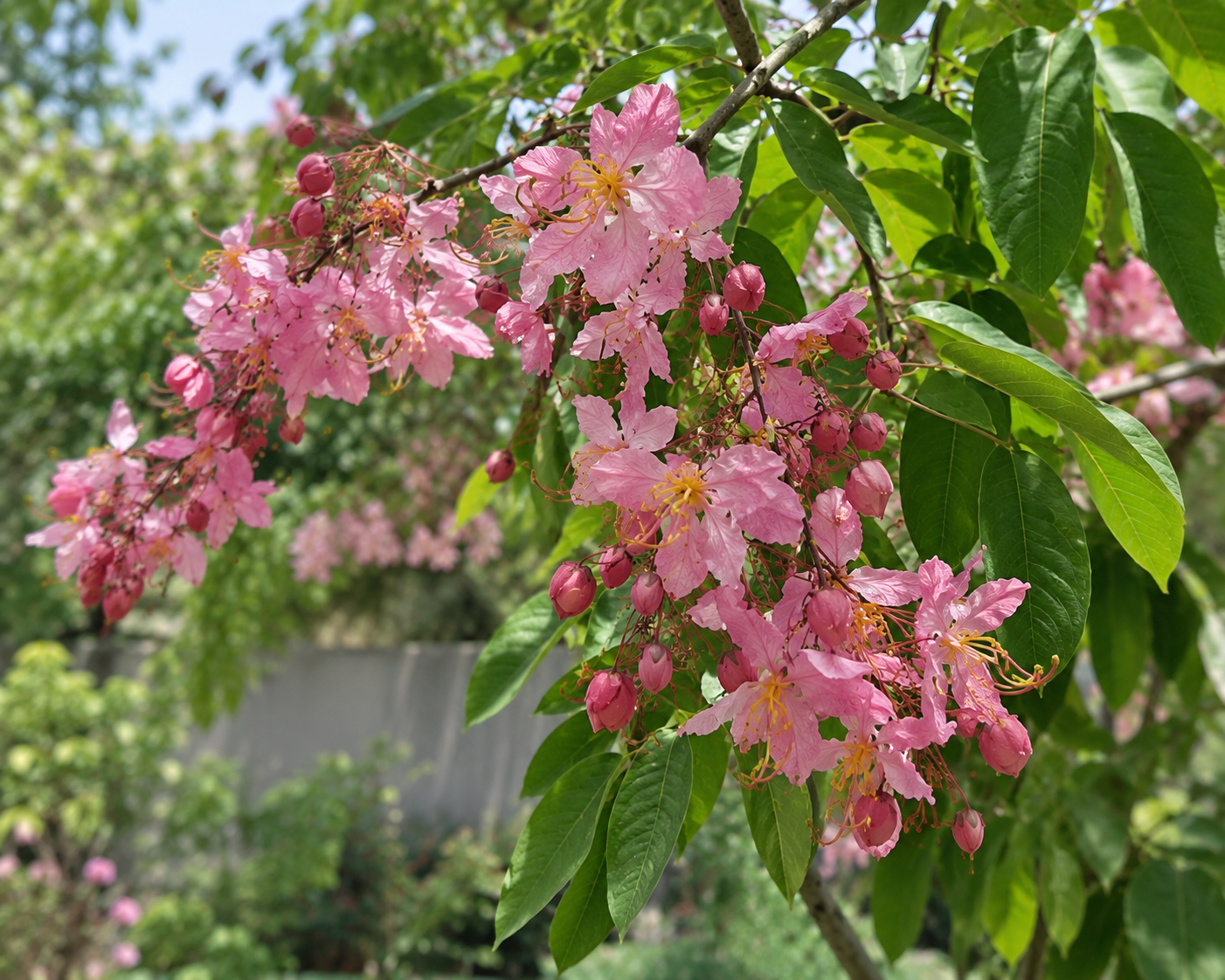
Few flowering trees are as generous as Cassia nodosa. Commonly called the pink shower tree, Java cassia or pink cassia, it is an outdoor ornamental tree that covers its branches in soft pink flowers every spring. It is suitable for large gardens, farmhouses, roadsides and open lawns, and it grows well in the climate of Pakistan. If you want to buy Cassia nodosa plants online in Pakistan, this guide explains what the tree looks like, how it grows and how to keep it healthy.
What is Cassia nodosa?
Cassia nodosa belongs to the legume family (Fabaceae) and is native to parts of Southeast Asia, including Indonesia. It is a medium to large spreading tree that is deciduous or semi-deciduous, meaning it may shed some or all of its leaves for a short period before flowering. In good conditions it can reach a height of 10 to 15 metres, with a broad, rounded crown that provides generous shade.
It is often confused with Cassia fistula, locally known as Amaltas, which has drooping yellow flowers. Cassia nodosa is easy to distinguish by its pink flowers.
Appearance and flowers
The leaves are pinnate, made up of several pairs of narrow, glossy leaves arranged along a central stalk. The flowers appear in dense clusters along the branches, usually from spring to early summer. They bloom in shades of deep pink or salmon and gradually fade to a lighter colour, so a single tree can display several colours at once. After flowering, the tree produces long, thin, cylindrical pods that turn dark brown as they mature and contain many seeds.
Why it suits Pakistan.
This tree adapts well to hot climates. It handles the heat of Punjab and Sindh, and is drought tolerant once established. Young plants are more sensitive to frost, so protect them during their first winters in colder areas. Since it is a large outdoor tree, it needs an open space and should not be grown indoors or in small pots for long periods.
Sunlight and location
Plant Cassia nodosa in a location that receives full sun for most of the day. Sunlight is the main factor behind heavy flowering, and trees grown in shade will flower poorly. Leave plenty of room for the crown and roots to spread. A minimum distance of 6 to 8 meters from buildings, boundary walls, drains, and underground pipes is a sensible guideline.
Soil requirements
The tree adapts to a range of soils but does best in well-drained, moderately fertile soil. Loamy or sandy loam soil is ideal. Very heavy soil that stays wet can cause root problems, so improve drainage with organic fertilizer and coarse sand before planting. Prepare a planting hole twice the width of the root ball, making sure the trunk base stays even with the soil surface.
Watering Instructions
Young trees need regular watering to develop a strong root system, usually two to three times a week in summer, depending on the weather. Give the tree a deep, thorough soak instead of frequent light watering. Once the tree is established, usually after a year or two, it will need very little irrigation. Reduce watering in winter, and always avoid standing water around the trunk.
Fertilizing
A light feeding program is sufficient. Apply well-rotted manure or farmyard manure around the base at the start of the growing season. A balanced fertilizer can be used twice a year for young trees. Excess nitrogen encourages leafy growth at the expense of flowers, so use it in moderation.
Pruning and Shaping
Pruning helps maintain a neat structure and better air flow. Remove dead, damaged, or crossing branches, and lightly shape the tree after the flowering season is over. Pruning before flowering removes buds that form on existing branches and reduces the display, so timing is of the essence. In the early years, train the tree to a strong trunk if you want a shade tree with a clean trunk.
Propagation
Cassia nodosa is primarily grown from seed. The hard seed coat slows germination, so gardeners usually soak the seeds in warm water for 24 hours or lightly remove the coat before sowing. The plants should be kept in bright light and moved to larger containers as they grow. Since trees grown from seed take several years to flower, many gardeners prefer to purchase a healthy plant from a reputable nursery.
Landscape Uses
This tree works well as a specimen tree in lawns, a shade tree in farmhouses, and an avenue tree along driveways and roads. Its spreading canopy provides shade in the warmer months, and the flowers attract bees and other pollinators. It pairs well with other flowering trees such as tabibou, which offers colorful seasonal contrast.
Common Problems
Cassia nodosa is generally hardy, but some problems may arise:
Leaf-eating caterpillars: Check plants regularly and remove pests by hand or use an appropriate organic spray.
Sap-sucking insects: A neem oil spray helps control aphids and scale insects.
Root rot: Most often caused by poorly drained soil or too much watering.
Poor flowering: Often the result of too much shade, heavy pruning at the wrong time, or excess nitrogen.
Final Thoughts
Cassia nodosa is a beneficial outdoor tree that combines shade, seasonal color, and low maintenance. With full sun, well-drained soil, and careful early watering, it becomes a beautiful landmark tree that will remain attractive for many years.
Looking for healthy plants that are ready for your garden? Visit Haniplants, a trusted plant nursery serving customers across Pakistan, and order quality Cassia nodosa plants delivered to your doorstep.