
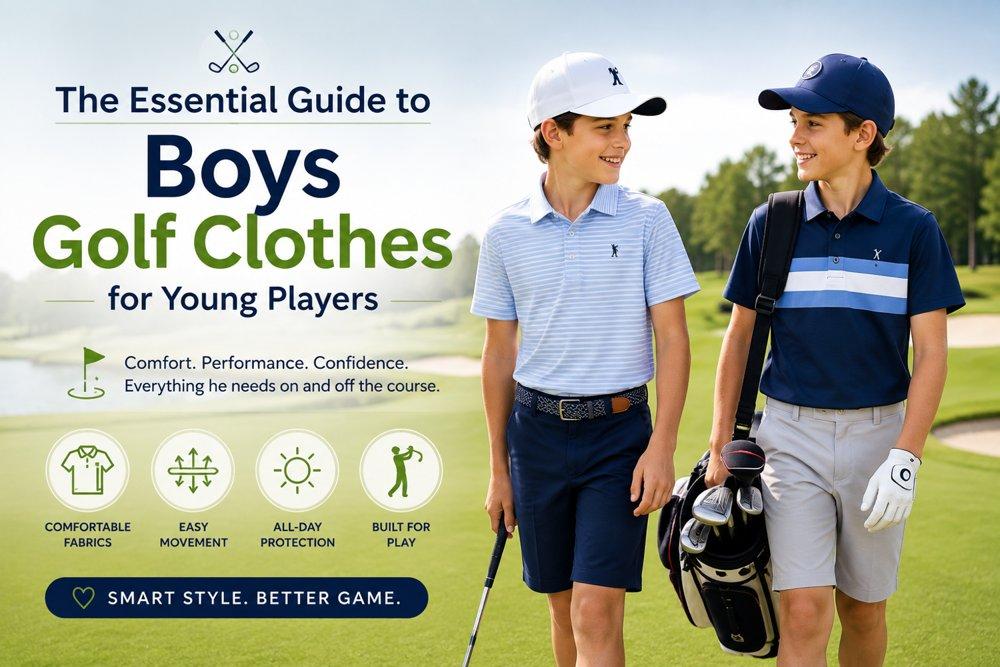
Outfitting a young golfer from scratch can feel overwhelming fast. Shirts, shorts, layering pieces, hats, all in a range of colors and sizes that a growing kid will outgrow within a season or two. The instinct might be to buy a large, coordinated wardrobe all at once, but a more strategic approach tends to save money and actually results in better-fitting, better-performing gear over time.
Building out boys golf clothes piece by piece, starting with the fundamentals and adding based on actual need, tends to work better than a single large purchase made before really knowing how often a kid will play or what specific conditions he'll be dressing for.
Start With the Pieces That Get Worn Most Often
Polo shirts and shorts form the foundation of nearly every golf outfit, and they're also the pieces that see the most frequent wear and washing. Starting here, with two or three reliable polos and a couple of pairs of shorts in versatile, neutral colors, gives a young golfer enough rotation to stay comfortable across most rounds without overcommitting to a full wardrobe before knowing what actually gets used.
Neutral colors are worth prioritizing early on, since they pair easily with whatever else gets added later. Building out bolder colors or specific patterns can come after the basics are covered, once it's clearer what a kid actually gravitates toward wearing.
Add Weather-Specific Pieces Based on When and Where You Play
Once the basics are covered, the next layer of a wardrobe should reflect actual playing conditions rather than a generic assumption about what's needed. Families in consistently warm climates might prioritize lightweight, breathable pieces almost exclusively, while those dealing with real seasonal shifts benefit more from adding a couple of layering pieces, a light jacket or vest that handles cooler mornings without requiring a full outfit change.
This is also where it makes sense to think about how often a kid actually plays. A once-a-month casual golfer doesn't need the same depth of wardrobe as a kid playing multiple times a week or competing in junior tournaments regularly.
Don't Overbuy Ahead of Growth
It's tempting to buy several sizes ahead to get more mileage out of a purchase, but oversized clothing can genuinely hurt performance, excess fabric bunching during a swing or a waistband that needs constant adjustment because it's too loose. A better approach is sizing up modestly, just enough to allow some growing room without sacrificing the fit needed for an actual swing.
Should Accessories Be Part of the Initial Wardrobe, or Added Later?
Accessories like hats, visors, and golf-specific socks are worth adding early, since sun protection and moisture management matter from the very first round, not just once a kid has been playing for a while. These tend to be lower-cost additions compared to shirts and shorts, making them reasonable to include even in an initial, smaller wardrobe build.
How Do You Know When It's Time to Add More Pieces?
A natural cue is simply running out of clean options between wash cycles, if a kid is playing frequently enough that two or three shirts aren't enough to get through a week, it's a sign the wardrobe needs to expand. Growth is another obvious trigger, once existing pieces stop fitting properly regardless of how well they've held up otherwise.
Is It More Cost-Effective to Buy a Few Higher-Quality Pieces or Many Cheaper Ones?
Generally, a smaller number of well-made pieces tends to outperform a larger wardrobe of lower-quality basics, both in comfort and in how long the clothing actually lasts. Cheaper pieces often need replacing well before a season ends, which can end up costing more over time than investing a bit more upfront in fewer, better pieces.
The Bottom Line
Building a boys golf wardrobe doesn't need to happen all at once. Starting with a few reliable basics, adding weather-specific pieces based on actual playing conditions, and expanding gradually as a kid grows or plays more often tends to result in a more functional, better-fitting wardrobe than committing to a large purchase upfront based on guesswork.