
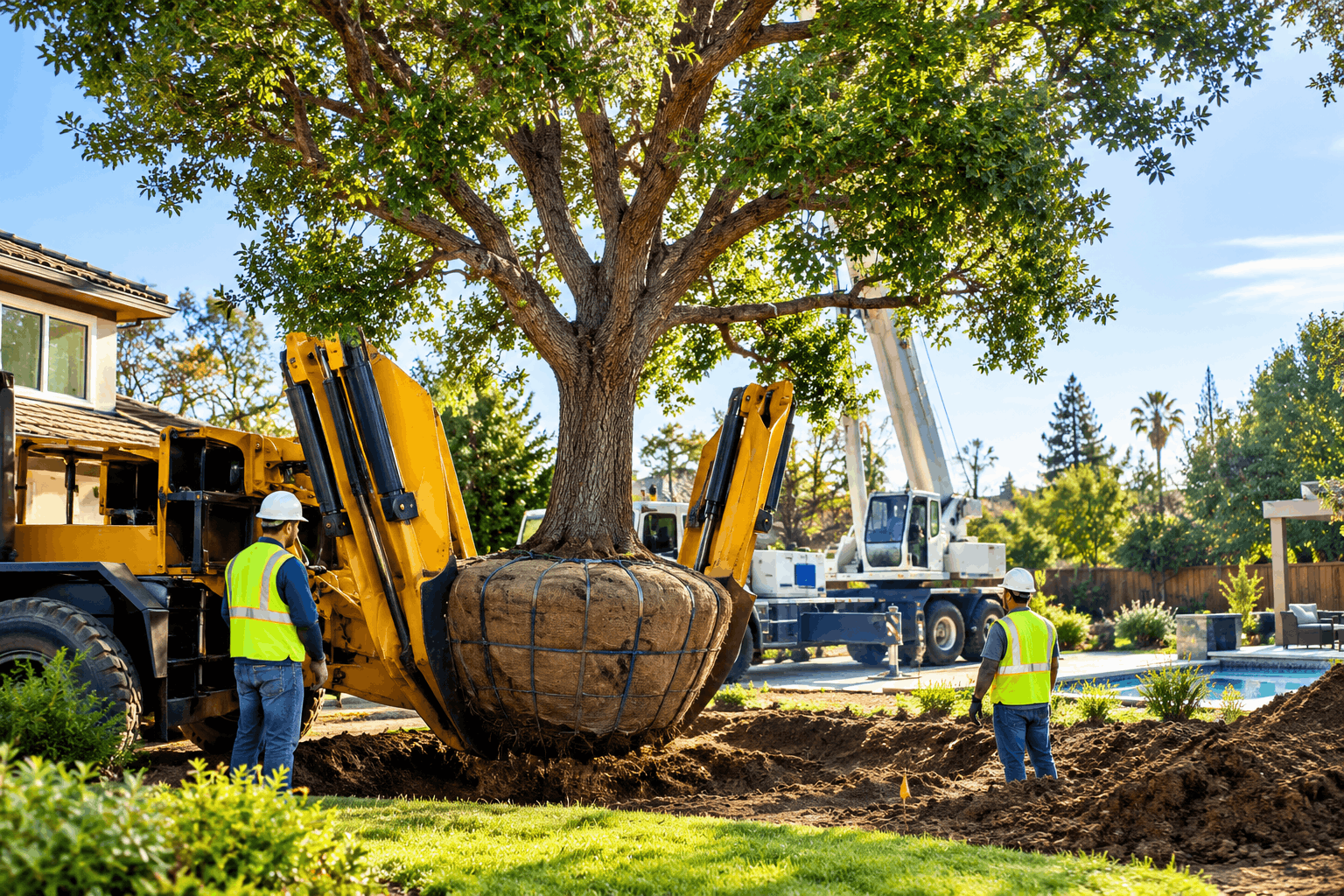
A family plans a backyard addition. The design is approved and the contractor is booked. Then someone notices that a 20-year-old oak stands right where the foundation needs to go.
For years, most people in that position had only one choice, which was to cut the tree down. Today, Tree Moving Services in Santa Clara, CA give property owners another path. A mature tree can be lifted, relocated, and replanted somewhere else on the property, or even on a different site entirely.
The idea sounds dramatic. In practice, it is a careful, science-based process that arborists and specialty crews have refined over decades.
What Tree Moving Actually Involves
Think of a tree's root system like the wiring behind a wall. From the outside, only the trunk and canopy are visible. Underneath, a complex network keeps everything running, and cutting through it carelessly shuts the system down.
Tree moving works by protecting as much of that network as possible. Crews dig around the tree to form a root ball, a solid mass of soil and roots that travels with the tree. A common rule of thumb is about 10 to 12 inches of root ball diameter for every inch of trunk thickness.
That means a tree with a six-inch trunk may need a root ball five or six feet wide. Moving that much soil takes more than shovels. Depending on the tree's size, crews may use hydraulic tree spades, wooden boxing systems, cranes, or flatbed trucks.
Why Preparation Matters More Than the Move
The actual lift often takes only a few hours. The real work starts weeks or even months earlier.
Many arborists begin with root pruning. They cut the outer roots in stages so the tree grows new feeder roots closer to the trunk. Imagine packing for a long trip by slowly moving essentials into a smaller bag. By moving day, the tree carries what it needs in a more compact space.
Timing also plays a big role. In the South Bay's Mediterranean climate, cooler months from late fall through early spring usually work best. Trees lose less water in mild weather, which reduces stress during recovery.
Soil is another factor. Much of the region sits on dense clay, which holds water and drains slowly. Experienced crews study the new planting site first, because a tree moved into poorly draining soil can struggle even after a perfect lift.
The Benefits of Relocating Instead of Removing
The most obvious benefit is time. A newly planted sapling may need 15 to 30 years to reach the size of the tree being moved. Relocation keeps decades of growth on the property.
There is also real financial value. Mature trees add shade, privacy, and curb appeal, all of which buyers notice. Buying a large specimen tree from a nursery can cost as much as moving an existing one, or more. It also comes with its own transplant risks.
Environmental value matters too. Established trees cool nearby surfaces, filter air, manage stormwater, and support local wildlife. In a dense, fast-growing area like Silicon Valley, keeping that canopy intact supports healthier neighborhoods.
Many cities in the region also have tree protection rules. Certain species and sizes, including many native oaks, may need a permit before anyone can remove them. In some cases, relocation offers a way to move a project forward while still respecting those rules.
Common Situations Where Tree Moving Makes Sense
Home renovations are one of the most frequent reasons. ADUs, pools, driveway expansions, and second-story additions often compete for the same space where a favorite tree grows. Relocating the tree lets the project continue without losing it.
Real estate is another common scenario. A seller may want to keep a sentimental tree, such as one planted when a child was born, and bring it to a new home. On the other side, developers and investors sometimes relocate valuable trees during site grading so they can be replanted as finished landscaping later.
Commercial properties use relocation too. Corporate campuses, schools, and retail centers across the valley redesign their landscapes over time. Moving existing trees keeps a mature look without waiting years for new plantings to fill in.
Then there are simple layout changes. A tree planted too close to a house decades ago may now crowd the roof or threaten a foundation. Shifting it 30 feet into open space can fix the problem for good.
Choosing the Right Approach
Not every tree is a good candidate. Species, age, health, and site access all affect the outcome. Coast live oaks, olives, palms, and many ornamental species often move well. Trees with disease, heavy decay, or very shallow roots may be poor candidates.
Most reputable professionals start with an on-site assessment before they recommend anything. Specialty firms such as Mighty Tree Movers Inc typically look at trunk size, root health, soil conditions, and the route between the old and new locations before they plan a move.
Property owners comparing Tree Transplant Services in Santa Clara, CA often find it helpful to ask about aftercare as well. The first one to two years after a move decide whether the tree thrives. A clear watering schedule, mulching, and follow-up inspections are part of a good plan.
Aftercare and Recovery
Moved trees usually go through some transplant shock. Leaves may wilt, yellow, or drop in the first season. This is normal and often temporary.
Deep, consistent watering is the most important part of recovery. The goal is to keep the root ball moist without waterlogging it, which takes a steady routine in clay-heavy soil. Some trees also need temporary bracing or staking until new roots anchor them.
With patience, most healthy trees settle in and resume normal growth within a few years. As more property owners see trees as long-term assets rather than obstacles, relocation will likely become a standard part of planning for construction and landscaping.
The most valuable tree on a property is often the one that is already growing there. It just may need a new place to stand.
Anyone weighing Tree Moving Services in Santa Clara, CA for a future project will get the best results by planning early and giving the tree time to prepare. For many, Tree Transplant Services in Santa Clara, CA turn what looked like a loss into a lasting feature of the landscape.
FAQs
How much does it cost to move a mature tree?
Costs vary widely based on tree size, species, site access, and equipment. Smaller trees may cost a few hundred to a few thousand dollars to move. Large specimens that need cranes or boxing can cost significantly more.
Can a large tree survive being transplanted?
Yes, many large trees survive when the move is well planned. Root pruning ahead of time, correct root ball sizing, good timing, and consistent aftercare all improve the odds of success.
What is the best time of year to move a tree in Northern California?
Late fall through early spring is usually ideal. Cooler temperatures and seasonal rain reduce water stress and help roots settle in before summer heat arrives.
Do I need a permit to move a tree?
It depends on the city, species, and trunk size. Many Bay Area cities protect certain trees, especially native oaks. Check with the local planning or public works department before any work begins.
How long does it take a transplanted tree to recover?
Most trees need one to three years to fully recover. During that time, regular deep watering and monitoring for stress signs help the tree rebuild its root system.