
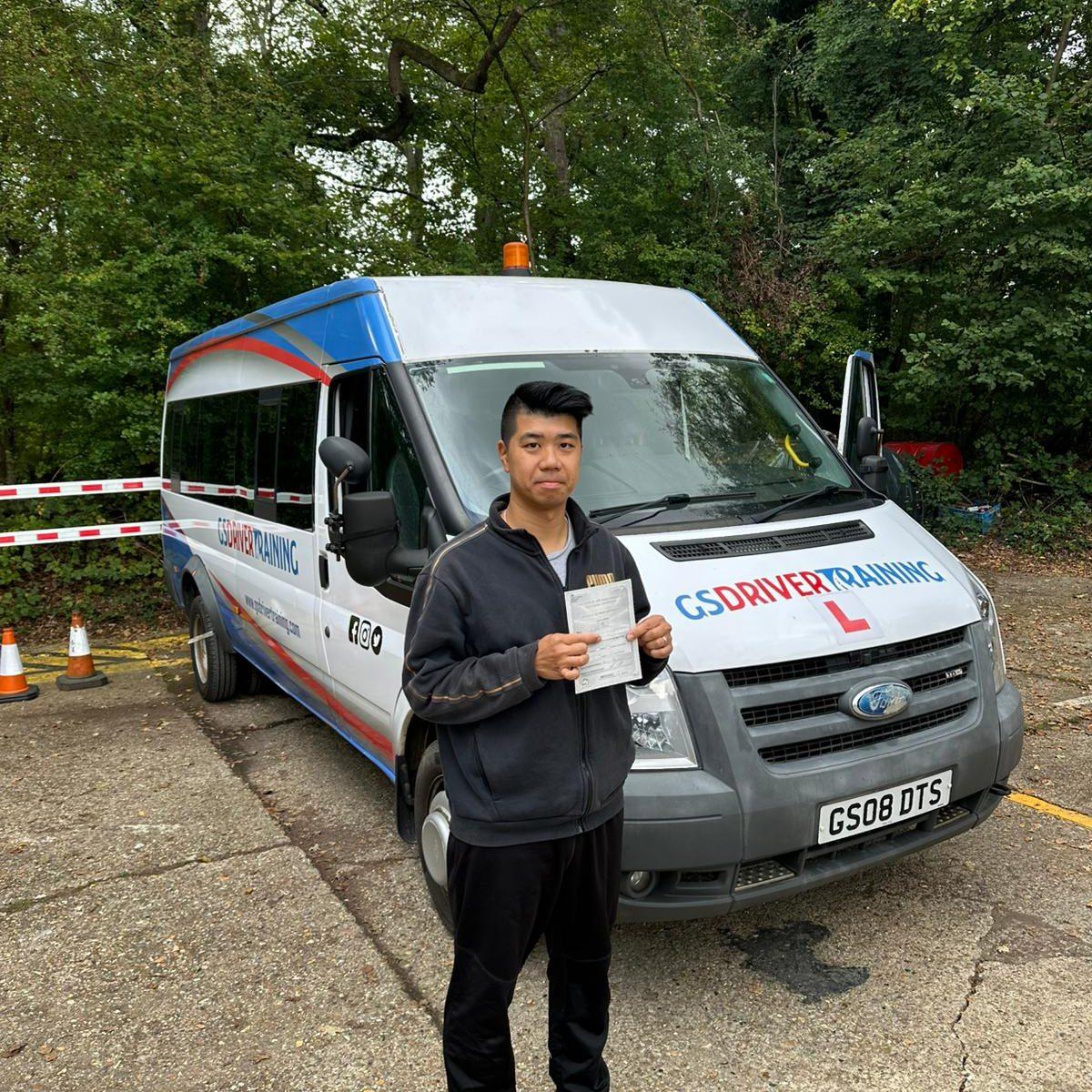
If you want to drive a larger vehicle that is heavier than a standard car but does not fall into the heavier HGV categories, you may need a C1 driving licence. In the UK, a C1 licence allows drivers to operate vehicles weighing between 3,500kg and 7,500kg Maximum Authorised Mass (MAM), subject to the licence conditions.
C1 training is commonly required for people who want to drive larger vans, ambulances, specialist vehicles, and certain horseboxes. Understanding the licence requirements can help you determine whether C1 training is suitable for your driving needs.
What Is a C1 Driving Licence?
A C1 driving licence is a category of UK driving licence that allows you to drive medium-sized goods vehicles with a maximum authorised mass of more than 3,500kg but no more than 7,500kg.
For example, a vehicle that weighs 5,000kg MAM would generally require a C1 licence if you are driving it on public roads.
The C1 category sits between the standard Category B car licence and the heavier Category C HGV licence. It is therefore useful for drivers who need to operate larger vehicles but do not require a full Category C entitlement.
Who Needs a C1 Licence?
You may need a C1 licence if the vehicle you want to drive has a MAM above 3,500kg and up to 7,500kg.
Common examples include:
1. Ambulance Drivers
Some ambulance vehicles fall within the C1 weight category. Drivers who need to operate these vehicles may require C1 entitlement, depending on the vehicle's authorised weight and their driving duties.
C1 training can help drivers develop the vehicle-control skills required when operating a larger and heavier vehicle.
2. 7.5-Tonne Vehicle Drivers
A C1 licence is particularly relevant for drivers who need to operate vehicles up to 7.5 tonnes. These vehicles are larger than standard vans and require greater awareness of vehicle size, braking distance, positioning and road space.
3. Specialist Van Drivers
Some specialist vans can exceed the 3,500kg limit for a standard Category B licence. If the vehicle falls within the C1 weight range, the driver may need C1 entitlement.
This can apply to certain adapted, specialist or commercial vehicles.
4. Horsebox Drivers
Some horseboxes have a MAM above 3,500kg. If the vehicle falls within the C1 weight range, a C1 licence may be required.
The important factor is the vehicle's authorised weight rather than simply its physical size or appearance.
What Can You Drive with a C1 Licence?
A C1 licence generally permits you to drive vehicles with a MAM between 3,500kg and 7,500kg. Depending on the specific vehicle and licence entitlement, there can also be rules relating to towing a trailer.
Before driving a particular vehicle, check its MAM and the requirements attached to your licence category. If the vehicle exceeds the C1 limits, you may need a different licence category.
What Are the C1 Licence Requirements?
The requirements can depend on your circumstances and when you obtained your driving licence.
For new applicants, obtaining C1 entitlement normally involves meeting the relevant medical requirements and completing the required theory and practical testing.
Drivers should also check the current requirements with the DVLA before starting training, as licensing rules and procedures can change.
Do You Need a Medical for C1 Training?
Medical requirements apply to C1 licence applications. Applicants generally need to meet the relevant medical standards for driving larger vehicles and complete the appropriate medical process.
A medical assessment can be an important early step when planning C1 training, particularly if you are applying for the entitlement for the first time.
What Is a C1 Driving Course?
A C1 driving course provides practical training to help you prepare to drive a vehicle within the C1 category and work towards the required practical test.
Training can cover areas such as:
- Vehicle safety checks
- Vehicle controls and handling
- Road positioning
- Observation and anticipation
- Manoeuvring
- Reversing
- Junctions and roundabouts
- Appropriate speed control
- Safe braking and stopping
- Practical test preparation
The exact training structure and duration can vary depending on your previous driving experience and the vehicle being used.
C1 Licence vs Category C Licence
C1 and Category C licences are both used for larger vehicles, but they cover different weight ranges.
A C1 licence is generally used for vehicles over 3,500kg and up to 7,500kg MAM. A Category C licence covers heavier rigid vehicles above the C1 limit, subject to the applicable licensing requirements.
Choosing the appropriate licence category depends on the vehicle you intend to drive and its authorised weight.
Why Is C1 Training Important?
Driving a vehicle weighing several tonnes is different from driving a standard car. The vehicle may have a larger turning circle, increased braking distance and different handling characteristics.
Professional C1 training gives drivers an opportunity to practise these skills under the guidance of an instructor before taking the practical test.
It can also help drivers become more familiar with the dimensions and controls of the vehicle they intend to drive.
How Do You Get a C1 Driving Licence?
The process will depend on your existing licence and circumstances, but a typical route includes:
- Check your eligibility for C1 entitlement.
- Complete the required medical process.
- Apply for the relevant provisional entitlement if required.
- Complete the required theory tests.
- Take professional C1 driving lessons.
- Complete the C1 practical driving test.
- Receive your C1 entitlement once the required tests are successfully completed.
It is important to check the latest requirements before applying, particularly if your circumstances or existing licence entitlements are different.
Is a C1 Licence Right for You?
A C1 licence may be relevant if your work or personal requirements involve driving a vehicle between 3,500kg and 7,500kg. It can be particularly useful for people working with ambulances, specialist vehicles, larger vans, horseboxes and other vehicles within the C1 weight range.
Before booking a course, identify the vehicle you need to drive and check its MAM. This will help you determine which licence category you need.
Start Your C1 Driving Training
If you need to drive a vehicle within the C1 category, appropriate training can help you prepare for the practical test and develop the skills needed to handle a larger vehicle safely.
GS Driver Training provides C1 driving courses for drivers looking to gain the skills and licence entitlement needed for C1 vehicles. Check the course details and current requirements before booking your training.