
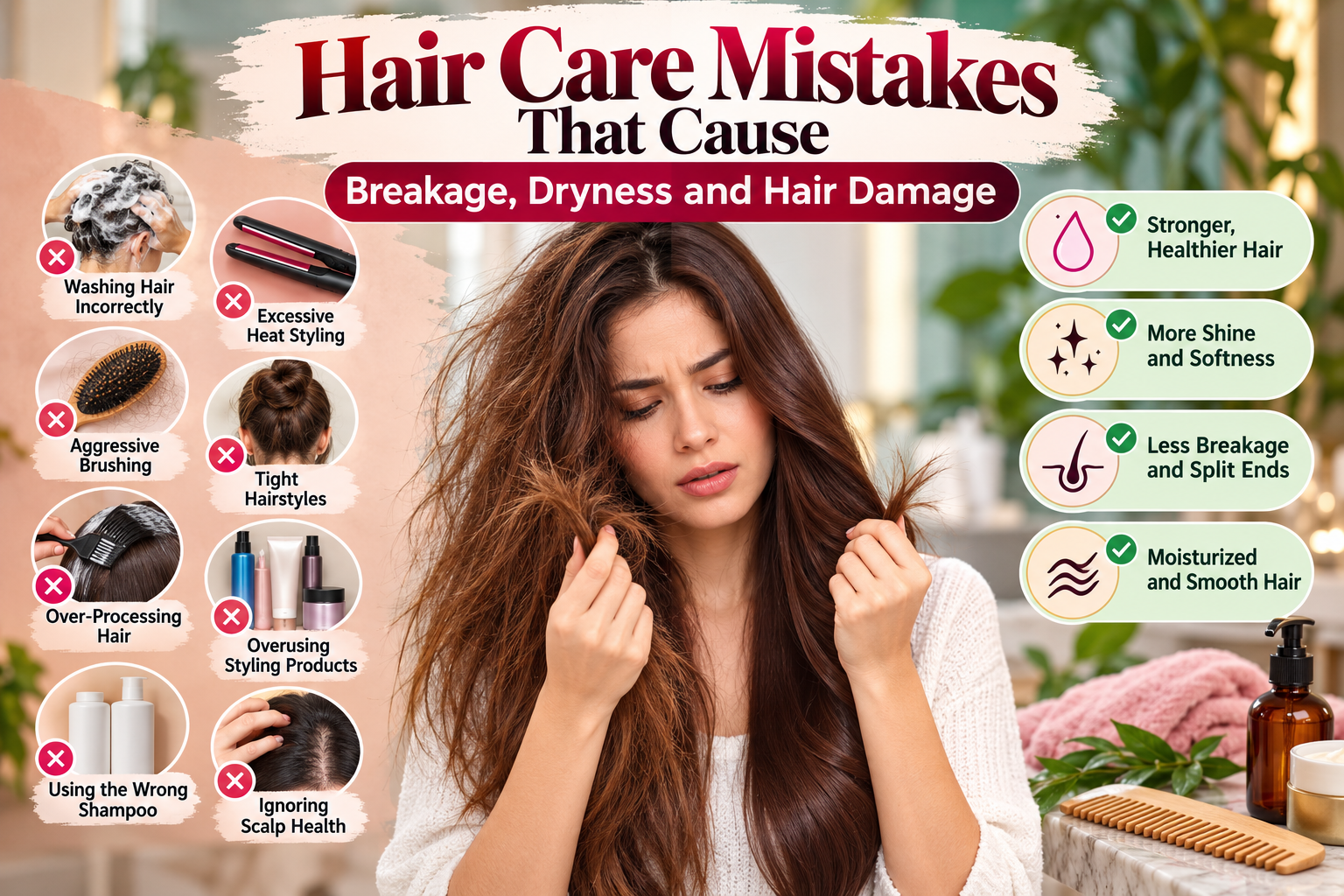
Healthy-looking hair does not necessarily require a complicated routine or dozens of products. In many cases, the biggest improvement comes from avoiding habits that gradually weaken the hair. Frequent heat styling, aggressive brushing, overwashing, tight hairstyles, and excessive chemical treatments can all contribute to hair breakage, dryness, split ends, and a rough appearance.
Understanding common hair care mistakes can help you build a routine that protects your hair instead of unintentionally damaging it. Whether your hair is naturally dry, chemically treated, curly, straight, fine, or thick, simple changes can make everyday care gentler and more effective.
This guide explains why hair becomes weak and dry, the most common mistakes that can cause damage, and practical hair care tips for maintaining stronger, healthier-looking hair.
Why Hair Becomes Dry, Weak or Damaged
Hair can become dry or damaged for several different reasons. The outer layer of the hair shaft, known as the cuticle, helps protect the inner structure. Repeated chemical processing, excessive heat, friction, and harsh handling can affect the condition of this outer layer.
When hair becomes overly dry or damaged, it may feel rough, look dull, become difficult to detangle, or develop split ends. Hair that has been bleached, colored, chemically straightened, or frequently heat-styled can be particularly vulnerable.
Environmental factors can also contribute. Sun exposure, dry air, pollution, swimming, and frequent exposure to water can affect the feel and appearance of hair.
The goal of hair damage prevention is not to eliminate every possible source of stress. Instead, it is about reducing unnecessary damage and creating consistent healthy hair habits.
10 Common Hair Care Mistakes
1. Washing Hair Incorrectly
One of the most common hair care mistakes is treating every part of the hair the same way during washing.
Your scalp produces natural oils, so shampoo is primarily intended to cleanse the scalp and roots. Scrubbing the lengths aggressively can create unnecessary friction and leave the hair feeling dry.
Very hot water can also make hair feel drier. Instead, use lukewarm water and massage shampoo gently into the scalp with your fingertips.
After rinsing, apply conditioner mainly to the mid-lengths and ends, especially if your hair tends to be dry or tangled.
How often you should wash depends on your scalp, hair type, lifestyle, and personal needs. Some people need frequent washing because their scalp becomes oily, while others can go longer between washes.
2. Using the Wrong Shampoo
Another common mistake is choosing shampoo based only on fragrance, price, or marketing claims rather than your actual hair and scalp needs.
For example, someone with an oily scalp may need a different cleansing approach from someone with dry, curly, or chemically processed hair.
If your hair feels consistently dry after washing, consider whether your shampoo is too cleansing for your hair type. If your scalp becomes oily or uncomfortable quickly, a heavier moisturizing shampoo may not be the best fit.
When choosing a shampoo, consider:
- Your scalp type
- Hair texture
- Dryness level
- Whether your hair is color-treated
- Whether your hair is chemically processed
- How frequently you wash
- Your styling habits
The right shampoo should leave your scalp clean without unnecessarily stripping your hair.
3. Skipping Conditioner
Skipping conditioner is another mistake that can contribute to difficult-to-manage hair.
Conditioner helps improve softness, smoothness, and manageability after cleansing. It can also make detangling easier, reducing the amount of pulling required when brushing.
If your hair is fine, you do not necessarily need to avoid conditioner altogether. Instead, use a smaller amount and apply it mainly to the lengths and ends.
People with curly, coarse, dry, or chemically processed hair may find regular conditioning particularly useful.
For an effective routine, shampoo the scalp as needed and follow with conditioner appropriate for your hair type.
4. Excessive Heat Styling
Flat irons, curling irons, hot brushes, and blow dryers can make styling easier, but excessive heat is one of the most important areas to address when thinking about hair breakage and damage.
Repeated exposure to high temperatures can leave hair feeling dry, brittle, and rough.
To reduce heat-related damage:
- Use a heat-protectant product before styling.
- Choose a moderate temperature whenever possible.
- Avoid repeatedly passing a hot tool over the same section.
- Allow hair to dry appropriately before using certain hot tools.
- Give your hair breaks from heat styling.
- Avoid holding hot tools on one section for too long.
Heat protection does not eliminate the effects of high temperatures, so controlling both the temperature and frequency of styling is important.
5. Aggressive Brushing
Brushing your hair too aggressively can cause unnecessary pulling and mechanical stress.
Wet hair can be particularly vulnerable to stretching and breakage, depending on the hair type and condition. Instead of quickly pulling a brush through tangled hair, work through knots gently.
Start at the ends and gradually work upward toward the roots. A suitable wide-tooth comb or detangling brush may make the process easier.
Avoid repeatedly brushing the same area simply to make the hair perfectly smooth. The objective should be gentle detangling rather than excessive manipulation.
If your hair becomes tangled frequently, consider whether dryness, product buildup, friction, or the wrong detangling technique could be contributing.
6. Wearing Tight Hairstyles
Ponytails, buns, braids, and other hairstyles can be convenient, but consistently wearing hair very tightly may place stress on the hair.
Repeated tension in the same areas can contribute to breakage. Tight elastic bands can also create friction and pulling.
Try alternating hairstyles and avoid securing your hair excessively tightly. Choose hair accessories that are gentle and do not repeatedly snag the strands.
If a hairstyle causes pain or significant pulling around the scalp, it is worth loosening it or choosing a different style.
Changing your hairstyle regularly is a simple hair damage prevention strategy that can reduce repeated mechanical stress.
7. Over-Processing Hair
Coloring, bleaching, relaxing, perming, and other chemical processes can change the structure and condition of the hair.
These treatments do not automatically mean your hair will become damaged, but repeated or overlapping chemical processing can increase the risk of dryness and breakage.
One common mistake is applying a chemical treatment over hair that has already been heavily processed without considering its current condition.
If you regularly color or chemically treat your hair, allow appropriate time between services and follow professional or product-specific instructions.
When possible, avoid performing multiple intensive chemical treatments close together unless a qualified professional recommends an appropriate approach.
8. Poor Product Selection
Using too many products—or products that do not match your hair's needs—can make a routine unnecessarily complicated.
A product designed for one hair type may not work equally well for another. For example, a rich product may be useful for coarse or very dry hair but feel heavy on fine hair.
When selecting products, think about the specific problem you are trying to address.
Do you need:
- Moisture?
- Detangling?
- Heat protection?
- Color care?
- Scalp cleansing?
- Frizz control?
- Lightweight conditioning?
- Styling hold?
You do not need to purchase every product marketed as essential. A smaller routine with products that serve a clear purpose can often be easier to maintain.
9. Ignoring Scalp Health
Hair care is not only about the strands. The scalp is also an important part of your overall routine.
Excessive product buildup, infrequent cleansing, irritation, or persistent scalp concerns can make hair care more difficult.
Use a shampoo appropriate for your scalp and avoid aggressively scratching or scrubbing it.
If you experience persistent itching, redness, scaling, pain, unusual shedding, or other ongoing scalp concerns, consider speaking with a dermatologist or another qualified healthcare professional rather than attempting to treat the issue solely with cosmetic products.
A balanced routine should care for both the scalp and the hair lengths.
10. Overusing Styling Products
Styling products can help create your desired look, but using too much can lead to buildup and make hair feel heavy, sticky, or difficult to manage.
Hairspray, gels, waxes, creams, oils, dry shampoo, and other styling products all have different purposes. Using several layers of products every day may not be necessary.
Apply only the amount you need and cleanse your hair appropriately when buildup becomes noticeable.
If your hair suddenly feels dull or coated despite following your usual routine, product buildup may be one factor to consider.
How to Repair and Protect Damaged Hair
Once hair has become significantly damaged, the most effective approach is usually to prevent additional damage while improving its appearance and manageability.
Hair that has already split cannot be permanently repaired back into its original structure with a cosmetic product. However, conditioning and protective products can temporarily improve the feel and appearance of damaged hair.
Start by reducing the habits that may be contributing to damage. Lower heat exposure, avoid unnecessary chemical processing, and handle hair gently when washing and detangling.
Regular trims can also help manage split ends and keep the hair looking neater.
For a damaged hair treatment routine, focus on products that provide conditioning, moisture, and appropriate protection. If your hair has been heavily processed, a strengthening or bond-focused treatment may also be worth considering.
For dry hair treatment, look for a routine that includes gentle cleansing, regular conditioning, and protection from excessive heat and friction.
Building a Simpler Hair Care Routine
A complicated routine is not necessarily a better routine. Start with the basics and add products only when you have a specific need.
A simple routine can include:
- Cleanse:Use a shampoo appropriate for your scalp and hair type.
- Condition:Apply conditioner to the lengths and ends.
- Detangle gently:Use an appropriate comb or brush and work through knots gradually.
- Protect:Apply heat protection before using hot styling tools.
- Treat:Add a hair mask or treatment when your hair needs additional conditioning.
- Style carefully:Reduce excessive heat and avoid hairstyles that place constant tension on the same areas.
- Maintain:Trim damaged ends as needed and adjust your routine when your hair's condition changes.
The key is consistency. Small changes repeated regularly can be more useful than occasionally using an expensive treatment while continuing damaging habits.
Products That Can Support Healthy Hair Care
The right hair care products can complement a good routine, but products should support healthy habits rather than replace them.
Depending on your needs, a basic collection might include a suitable shampoo, conditioner, heat protectant, and occasional treatment or hair mask.
When shopping, compare products according to your hair type and the problem you want to address rather than choosing solely based on popularity.
You can explore a selection of hair care products for different hair-care needs, including products that can complement everyday cleansing, conditioning, and styling routines.
If your hair is color-treated, chemically processed, curly, very dry, or prone to breakage, look for products specifically formulated to support those needs.
Remember that no product can completely prevent damage if hair is repeatedly exposed to excessive heat, harsh chemical processing, or aggressive handling. Product selection works best when combined with good daily habits.
FAQ
What are the biggest hair care mistakes that cause breakage?
Common mistakes include excessive heat styling, aggressive brushing, tight hairstyles, frequent chemical processing, skipping conditioner, and washing or handling hair too aggressively.
How can I prevent hair breakage?
To learn how to prevent hair breakage, focus on gentle handling, regular conditioning, reduced heat exposure, appropriate detangling, and avoiding excessive chemical processing. Keeping hairstyles loose and using heat protection can also help.
How often should I wash my hair?
There is no universal washing schedule. Your ideal frequency depends on your scalp, hair type, lifestyle, and styling routine. Wash when your scalp needs cleansing while avoiding unnecessary washing if your hair becomes excessively dry.
Can dry hair become healthy again?
You can improve the appearance, softness, and manageability of dry hair by using suitable conditioning products and reducing damaging habits. However, severely damaged portions of the hair cannot be completely restored to their original condition.
Is brushing wet hair bad?
Wet hair can be more vulnerable to stretching and mechanical stress. If you need to detangle it while wet, be gentle and use an appropriate comb or brush rather than pulling forcefully through knots.
Does conditioner prevent hair damage?
Conditioner can improve softness, reduce friction, and make hair easier to detangle, which may help reduce mechanical stress. It is one useful part of a broader hair-care routine.
Can tight hairstyles cause hair breakage?
Yes. Repeated tension from very tight ponytails, buns, braids, or similar styles can contribute to mechanical stress and breakage. Alternating hairstyles and avoiding excessive tension can help.
How can I protect damaged hair from heat?
Use a heat-protectant product, select a moderate temperature, minimize repeated passes with hot tools, and reduce how frequently you use high-heat styling. Air-drying when practical can also reduce heat exposure.
Final Thoughts
Avoiding common hair care mistakes can be just as important as buying the right products. Hair breakage, dryness, and visible damage often develop gradually through repeated exposure to heat, chemicals, friction, tension, and unsuitable routines.
The most useful hair care tips are often simple: wash gently, condition regularly, detangle carefully, limit excessive heat, avoid overly tight hairstyles, and choose products based on your hair and scalp needs.
If your hair already feels dry or damaged, focus on reducing further stress rather than trying to solve everything with multiple products at once. A simpler, consistent routine can help improve the look and feel of your hair while supporting better long-term hair damage prevention.
For persistent scalp problems, significant hair loss, or severe breakage, professional advice can help identify whether an underlying issue needs attention.
Learn more about Hair Care Mistake: https://www.overshopping.pk/best-hair-care-items/