
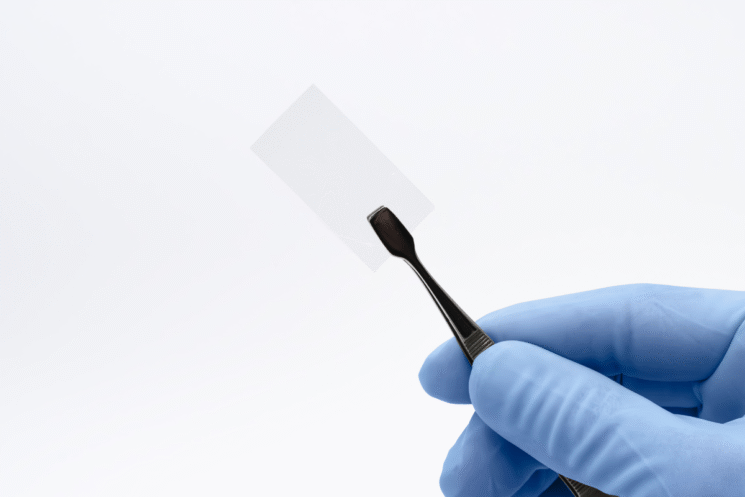
Amniotic tissue has become an important material in the development of products used across several areas of healthcare. Long before these products reach a healthcare professional, however, the tissue must move through a carefully controlled process. One of the most important parts of that process is preservation.
Preservation technology affects how donated tissue can be stored, transported, prepared, and eventually used according to a product’s intended application. As preservation methods have developed, manufacturers have gained different ways to prepare Amniotic Grafts while maintaining defined product characteristics and creating practical formats for healthcare settings.
For providers evaluating an Amniotic Membrane Allograft, understanding preservation is useful because the method used can influence storage conditions, preparation steps, shelf life, and everyday handling.
Why Does Amniotic Tissue Need Preservation?
Amniotic membrane is obtained from donated placental tissue. Once recovered, the tissue cannot simply be stored indefinitely in its original state. It must be processed and preserved according to controlled procedures.
Preservation is intended to maintain the tissue in a condition suitable for the product’s specified use while allowing time for processing, distribution, storage, and clinical application.
This presents manufacturers with an important challenge: developing a process that makes the final product practical to manage while maintaining the characteristics required by its specifications.
As a result, preservation is not just about extending storage time. It is closely connected to how Amniotic Grafts are manufactured and ultimately presented to healthcare professionals.
Dehydration Has Changed Storage Possibilities
Dehydration is one preservation approach used for certain amniotic tissue products. The process removes moisture from the tissue under controlled conditions.
One practical advantage of some dehydrated products is that they may be stored without the ultra-low-temperature equipment required by certain other preservation methods. Exact storage conditions depend on the individual product, so providers should always follow the manufacturer’s instructions.
This can influence how clinics manage inventory. Storage space, temperature requirements, preparation procedures, and product accessibility all matter when a healthcare facility is incorporating tissue products into its workflow.
Modern dehydration processes are therefore about more than convenience. They represent an effort to create stable, manageable product formats while meeting established manufacturing specifications.
Cryopreservation Offers a Different Approach
Cryopreservation takes a different route. Rather than removing moisture, this approach uses controlled low temperatures to preserve tissue.
Cryopreserved Amniotic Grafts generally have different storage and handling requirements from dehydrated products. Specialized freezing conditions may be necessary, and staff may need to follow specific preparation steps before use.
Neither preservation category should automatically be considered suitable for every clinical situation. The important point is that different technologies can produce products with different characteristics.
Healthcare professionals evaluating an Amniotic Membrane Allograft should look beyond the general tissue category and review how that particular product has been processed and preserved.
Preservation and Product Stability
One major goal of preservation technology is to create a product that remains within its defined specifications during its stated storage period.
That requires manufacturers to consider several variables. Moisture, temperature, packaging, transportation conditions, and exposure to the surrounding environment can all be relevant.
Packaging technology plays a significant role here. A preservation process would offer limited practical value if the tissue could not remain appropriately protected during shipping and storage.
Modern packaging systems are designed to work alongside preservation methods. Product labels can also provide information such as storage requirements, expiration dates, lot identification, and preparation instructions.
Together, preservation and packaging help make Amniotic Grafts manageable throughout their journey from processing facility to healthcare provider.
Technology Can Make Clinical Handling More Practical
Preservation methods also influence what happens after a package reaches a healthcare facility.
Consider two products requiring very different storage conditions. One may fit into existing inventory systems, while another may require dedicated equipment and additional preparation before use.
These practical differences can affect staff training, inventory management, and clinical workflow.
For this reason, healthcare professionals evaluating an Amniotic Membrane Allograft may want to consider questions beyond product dimensions. How should it be stored? Does it require preparation before application? What temperature range must be maintained? How should an unopened package be handled?
Clear answers to these questions can help facilities establish consistent procedures.
Preservation Is Connected to Product Format
Advances in preservation have also contributed to the availability of amniotic products in different sizes and configurations.
Manufacturers can prepare tissue into specific formats before final packaging. This provides healthcare professionals with options that may be considered according to the product’s intended use and the characteristics of the treatment area.
The format of an allograft can affect how it is stored and handled. Packaging must protect the tissue while making product identification straightforward for clinical staff.
This is one reason preservation technology should not be viewed as an isolated manufacturing step. It interacts with processing, sizing, packaging, storage, and distribution.
Quality Systems Support Preservation Technology
Advanced equipment alone does not determine product quality. Preservation technology must operate within a broader quality system.
Manufacturers may monitor processing conditions, equipment performance, storage temperatures, and other relevant parameters. Digital systems can assist with documenting these activities and maintaining records associated with specific product lots.
Temperature monitoring can be particularly important for products requiring controlled storage. If a product must remain within a defined temperature range, appropriate monitoring and handling procedures become part of responsible inventory management.
For healthcare professionals, the key is to follow the storage and handling instructions supplied with each product rather than applying the same process to every type of Amniotic Grafts.
Better Preservation Does Not Make Every Product Identical
As preservation technology improves, it is easy to assume that products within the same category are essentially interchangeable. That is not necessarily the case.
An Amniotic Membrane Allograft can differ from another in tissue configuration, processing method, preservation approach, dimensions, packaging, storage requirements, and intended use.
Even products using a similar preservation category may have different instructions.
Healthcare professionals should therefore evaluate the documentation for the exact product they are considering. Understanding these distinctions can help prevent assumptions based solely on broad terms such as “amniotic graft” or “preserved tissue.”
Where Preservation Technology Goes Next
The next stage of preservation technology will likely continue to focus on practical challenges such as product stability, controlled processing, storage efficiency, packaging, and traceability.
Digital temperature monitoring and improved inventory systems may also make it easier to follow products throughout distribution and storage. Meanwhile, continued advances in processing equipment may allow manufacturers to maintain tighter control over production variables.
For healthcare providers, these developments mean that understanding the technology behind a product is becoming increasingly valuable.
Preservation may happen long before a clinician opens the package, but its effects extend throughout the product lifecycle. From manufacturing and transportation to storage and preparation, preservation technology influences how Amniotic Grafts are delivered and managed.
When considering an Amniotic Membrane Allograft, looking at how the tissue was preserved provides another useful piece of information for understanding the product. As technology continues to develop, preservation will remain an important part of turning donated amniotic tissue into well-defined products for appropriate clinical applications.