
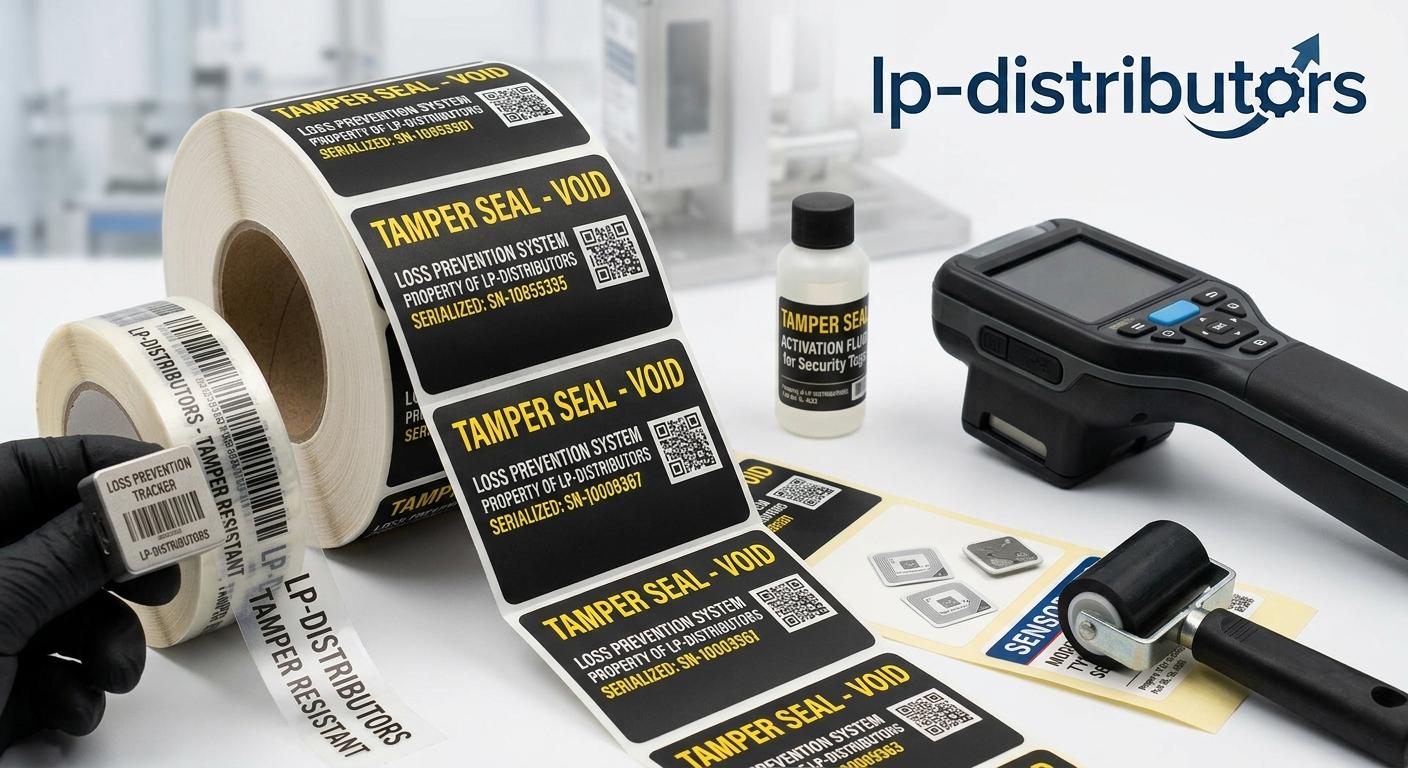
Retail businesses manage a wide range of merchandise every day, making inventory protection an important part of store operations. Electronic article surveillance systems and other security products can help retailers monitor merchandise and discourage unauthorized removal. Loss prevention equipment includes different types of tags, labels, detection systems, deactivators, detachers, lanyards, and related accessories designed for retail environments. Understanding how these components work together can help businesses develop a more organized approach to merchandise protection.
What Is Loss Prevention Equipment?
Loss prevention equipment refers to products and systems used by retailers to protect merchandise and reduce inventory shrinkage. These solutions can include electronic article surveillance (EAS) tags and labels, detection systems, deactivators, detachers, security lanyards, and specialized product-protection devices.
Different products are designed for different types of merchandise. For example, clothing may use reusable hard tags, while packaged goods can use discreet adhesive labels. The appropriate solution depends on the merchandise, store environment, and EAS technology being used.
Understanding EAS Technology
Electronic Article Surveillance, commonly called EAS, is widely used in retail security. EAS systems typically involve a combination of merchandise tags or labels and detection equipment installed near store exits.
Two commonly used EAS technologies are Acousto-Magnetic (AM) and Radio Frequency (RF). LP Distributors lists security products compatible with both AM and RF systems.
When protected merchandise passes through a detection area without the security device being properly deactivated or removed at checkout, the system can generate an alarm.
Types of Retail Security Products
Security Tags
Hard security tags are commonly attached to apparel and other merchandise. They are designed to remain attached during normal handling and are removed at the point of sale using an appropriate detacher.
Security Labels
Adhesive security labels provide a more discreet option for products where a traditional hard tag may not be practical. They can be applied to packaging, books, electronics, cosmetics, and other retail products.
Security Lanyards
Security lanyards can be used with products such as handbags, tools, sporting goods, and luggage. LP Distributors describes its lanyards as reusable security products for various merchandise categories.
Deactivators
Deactivators are used at checkout to deactivate compatible EAS labels after a legitimate purchase. This allows customers to leave the store without triggering the exit detection system.
Detachers
Detachers are designed to remove reusable hard tags from merchandise at checkout. Different tag systems may require specific detacher designs.
Choosing the Right Technology
When evaluating loss prevention equipment, retailers should first identify the type of EAS technology already installed in their store. Compatibility is important because tags, labels, detection systems, and checkout equipment need to work together.
AM and RF products use different operating frequencies and technologies. For example, LP Distributors lists 58 kHz AM products as well as 8.2 MHz RF tags and labels.
Using compatible components can help retailers maintain consistent operation throughout the merchandise protection system.
Matching Security Products to Merchandise
Different products require different protection methods. Apparel can often accommodate reusable hard tags, while small packaged items may be better suited to discreet labels.
Higher-value products such as handbags, tools, luggage, and sporting goods may require lanyards or specialized security devices. Retailers can therefore organize their merchandise into categories and select appropriate protection for each category.
The Role of Checkout Processes
Loss prevention is not limited to store exits. Checkout procedures are also an important part of an EAS system.
Employees need to know which products require tag removal or label deactivation after purchase. Proper checkout procedures help prevent legitimate customers from accidentally triggering alarms while ensuring that security devices remain active on merchandise that has not been purchased.
LP Distributors and Retail Security Products
LP-Distributors provides a range of retail security products, including AM and RF tags, labels, deactivators, detachers, lanyards, and other merchandise-protection products. Its product categories include tags, labels, systems, detachers, deactivators, lanyards, and specialized security solutions.
When evaluating a retail security supplier, businesses can review product compatibility, tag technology, application method, merchandise type, and the requirements of their existing EAS system.
Installation and Store Layout
The placement of EAS detection equipment can influence how a retail security system operates. Exit areas should be planned so that detection equipment covers appropriate customer pathways without unnecessarily interfering with normal traffic.
Retailers should also consider checkout locations, entrances, store layout, and merchandise placement when planning an EAS installation. Proper configuration and testing are important parts of maintaining an effective system.
Maintenance and Inventory Management
Regular inspection of tags, labels, detection systems, deactivators, and detachers can help identify damaged or malfunctioning components. Retail employees can also monitor whether security products are being applied consistently.
Loss prevention can work alongside inventory management practices. Combining merchandise protection with accurate stock records, staff procedures, and store monitoring can provide a broader approach to reducing shrinkage.
Conclusion
Loss prevention equipment encompasses a wide range of retail security products, including EAS tags, labels, detection systems, deactivators, detachers, and security lanyards. The right combination depends on the retailer's merchandise, existing technology, store layout, and operational procedures.
Understanding the differences between AM and RF systems, selecting compatible components, and applying appropriate security products to different merchandise categories can help retailers organize their merchandise protection strategy. LP Distributors' range of retail security products provides various options for businesses evaluating EAS-based merchandise protection.