
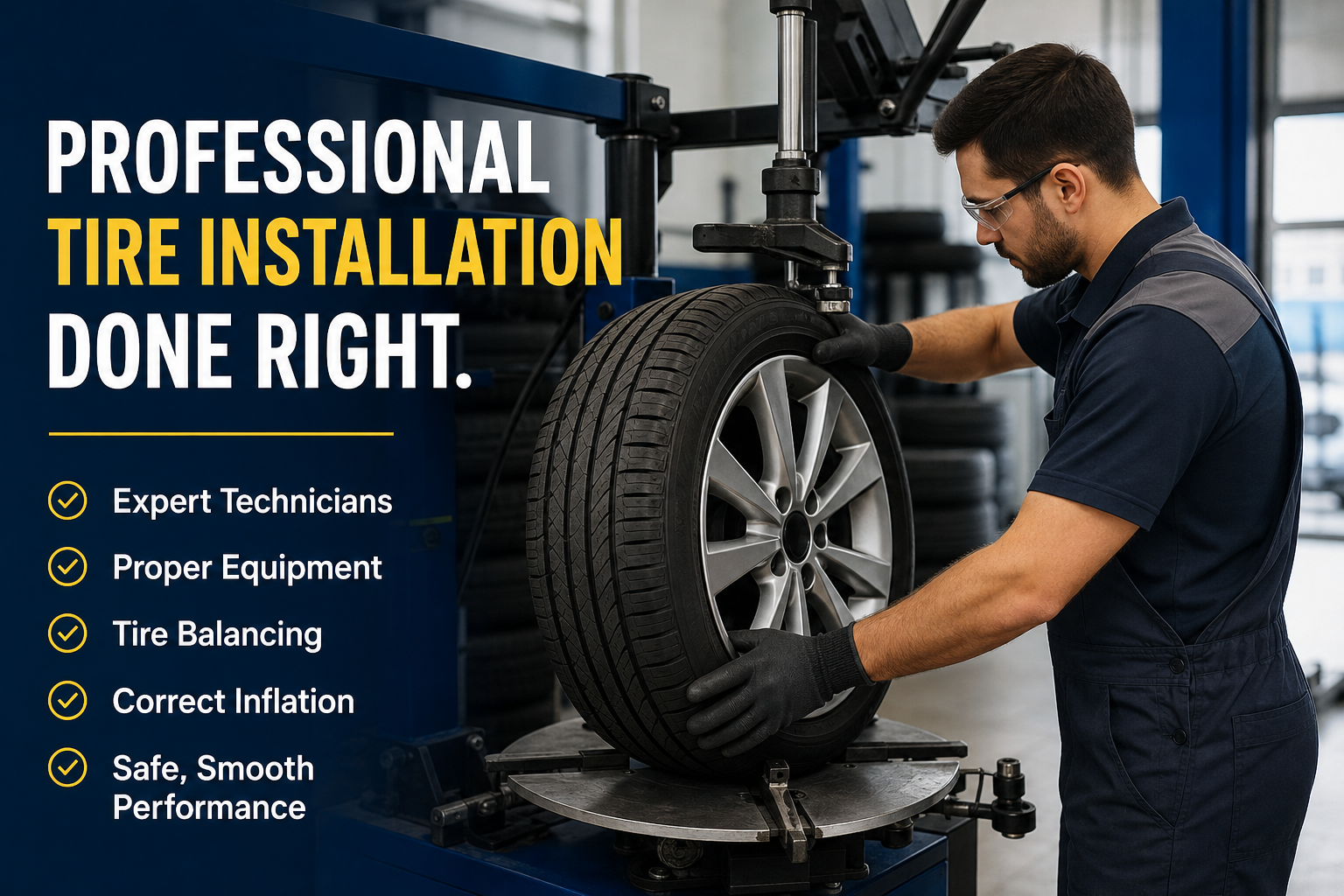
Tires are one of the few vehicle components that constantly maintain contact with the road. Their condition affects acceleration, steering, braking, and stability. Because of that, installing them correctly is not simply a cosmetic or maintenance task. It is an important part of keeping a vehicle predictable and safe.
How do professional tire installation services improve driving safety?
Professional tire installation services help support safe handling by ensuring tires are correctly mounted, balanced, inflated, and inspected. Proper installation can reduce vibration, promote even tread contact, and help the tires perform as intended under normal driving conditions.
Why can incorrect tire installation cause problems?
A tire that is not properly installed can create several issues. One of the most noticeable is vibration, particularly at highway speeds. In many cases, vibration can be related to wheel imbalance, although other wheel or suspension problems may also be responsible.
Incorrect inflation is another concern. Underinflated tires can generate additional heat and may wear more quickly along the edges. Overinflation can reduce the tire's contact area with the road and may make the ride harsher.
Proper installation helps establish the right starting point for tire performance.
Technicians generally pay attention to:
- Correct tire and wheel compatibility
- Proper tire seating
- Wheel balancing
- Recommended inflation pressure
- Lug nut installation
- Valve stem condition
- Visible wheel damage
These details may seem small, but together they contribute to consistent vehicle performance.
Why is tire balance important after installation?
Every wheel and tire assembly has a weight distribution. Even a small imbalance can create vibration when the wheel rotates at higher speeds.
Balancing involves using specialized equipment to identify uneven weight distribution and adding small weights where needed. A properly balanced assembly should rotate smoothly.
Without balancing, drivers may notice:
- Steering-wheel vibration
- Seat or floor vibration
- Uneven tread wear
- Reduced driving comfort
- Increased stress on certain components
Balancing does not replace other forms of maintenance, but it is an important part of a complete tire installation.
What else should be checked when installing new tires?
Installing tires provides a useful opportunity to inspect the components around them. A technician may notice a wheel that has been bent by a pothole, a damaged valve stem, or signs of unusual tread wear from an alignment or suspension issue.
This matters because new tires can sometimes hide an existing problem temporarily. If a vehicle has worn suspension components or poor alignment, the new tires may eventually develop uneven wear as well.
After installation, drivers should make tire checks part of their regular maintenance routine.
A simple routine includes:
- Check tire pressure regularly.
- Inspect tread for uneven wear.
- Look for cuts, cracks, or bulges.
- Rotate tires according to the recommended schedule.
- Pay attention to new vibrations or steering changes.
- Have unusual tire wear inspected promptly.
Can tire installation affect tire lifespan?
Yes. Correct installation and balancing can contribute to more even tire wear, but long tire life also depends on maintenance and driving conditions.
Aggressive driving, frequent hard braking, poor road conditions, incorrect inflation, and neglected alignment can all shorten tire life. Even the best tires cannot compensate for neglected vehicle maintenance.
Drivers should therefore think of installation as the beginning of proper tire care, not the end of it.
FAQ
Is tire balancing necessary with every new set of tires?
Balancing is generally recommended when installing new tires because it helps ensure the wheel and tire assembly rotates smoothly.
Can improperly installed tires cause vibration?
Yes. Installation or balancing problems can contribute to vibration, especially at higher speeds. Other wheel, suspension, or alignment issues can also cause similar symptoms.