
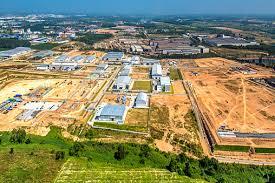
Every neighborhood began as someone's calculated risk. Long before the first home is listed for sale, a developer has to make a series of decisions — about land, zoning, infrastructure, and timing — that determine whether a project succeeds or stalls out halfway through. Residential property development is often misunderstood as simply "building houses," but the actual work is closer to project management, law, and civil engineering rolled into one discipline, with construction as the final, most visible step rather than the whole story.
Understanding how this process actually unfolds — from an empty parcel to a finished community — is useful whether you're a landowner weighing a sale, an investor evaluating a partnership, or simply someone curious about how a city grows. Here's a closer look at how residential development really works, the planning that precedes it, and the considerations that separate a smooth project from a troubled one.
Starting With the Land Itself
Every development begins with a piece of land, but not every piece of land is a good candidate for development. Before committing capital to a site, developers evaluate a range of factors: proximity to existing roads and utilities, soil and drainage conditions, environmental constraints, and current zoning designation. A parcel that looks ideal on a map can turn out to sit in a floodplain, lack sewer access, or carry deed restrictions that make development far more complicated — and expensive — than it first appears.
This due diligence phase typically includes a boundary and topographic survey, a geotechnical soil analysis, and an environmental assessment to identify wetlands, protected species habitat, or contamination risk. Skipping or rushing this stage is one of the most common reasons projects run into costly surprises later. A fast-growing market like San Antonio illustrates this well: land at the city's expanding edges is often less expensive precisely because it requires more infrastructure investment to become development-ready, and sorting out which parcels are worth that investment is where experienced developers earn their value.
The Entitlement Process: Turning Raw Land Into Approved Land
Once land is acquired, it enters what the industry calls the entitlement process — the legal and administrative work required to get a property approved for its intended use. This phase is often the longest and least predictable part of development, and it includes several distinct steps.
Zoning review and rezoning. Every parcel carries a zoning designation that dictates what can legally be built on it. If a developer's plans don't align with current zoning — say, converting agricultural land into a single-family subdivision — a rezoning application is required, often accompanied by public hearings before a planning commission and city council. Community input plays a real role here; organized neighborhood opposition, even to a project that technically complies with code, can add months or years to a timeline.
Platting and subdivision. Before a large tract can be divided into individual home lots, it must be legally subdivided through a process called platting. This involves detailed engineering plans for lot boundaries, road layouts, and easements, all of which must be approved and recorded with the local county before any lot can be sold as its own legal parcel.
Infrastructure approval. Developers must demonstrate that essential services — water, sewer, electricity, and stormwater drainage — can reach the site. In areas without existing infrastructure, this often means extending utility lines or building new roads as a condition of approval, which can significantly affect project budgets, particularly on land at the outer edges of a metro area.
Environmental and regulatory review. Depending on the site and jurisdiction, additional review may be required to address flood risk, stormwater management, and protected natural resources. This step protects both the surrounding environment and the eventual homeowners, though it can add real time to a project schedule.
Engineering the Site
With entitlements secured, attention shifts to the physical land itself. Civil engineers design the grading, drainage, and road systems that will support the finished neighborhood — work that has to account for how stormwater will move across the site during heavy rain, how roads will connect to the surrounding network, and how utilities will be routed beneath future streets and yards.
This phase also includes installing the underground infrastructure most future residents will never think about: water mains, sewer lines, storm drains, and electrical conduit, all completed before a single foundation is poured. Getting this stage right matters enormously, since correcting a drainage or grading mistake after homes are built is vastly more expensive than catching it on paper. In regions with clay-heavy soils and seasonal heavy rainfall — conditions San Antonio developers are well acquainted with — this engineering phase deserves particular care, since soil movement and drainage issues that go unaddressed early can surface as foundation problems years down the line.
From Finished Lots to Finished Homes
Once roads, utilities, and drainage are complete and inspected, raw land has officially become a set of finished, build-ready lots. This is often the point where a land developer's role ends and a homebuilder's role begins. Builders purchase these finished lots and construct the homes buyers eventually move into, following the standard building permit and inspection process that governs individual home construction.
It's worth noting that land development and homebuilding are frequently handled by entirely different companies, each with distinct expertise. Land development requires deep knowledge of civil engineering, entitlement law, and municipal processes, while homebuilding requires expertise in construction, design, and sales. Many successful development firms specialize specifically in the land side of the business, delivering finished lots to established homebuilders rather than constructing homes themselves — a division of labor that tends to produce better outcomes than a single company trying to do everything.
Key Considerations That Shape a Project's Success
A few factors consistently separate well-run residential developments from troubled ones.
Market timing and demand. A technically well-executed project can still struggle if it delivers the wrong product type for current demand — oversized lots in a market wanting starter homes, for example, or a lack of amenities in a market that expects them. Developers who track local absorption rates and buyer preferences closely tend to avoid this mismatch.
Realistic budgeting with contingency. Construction costs, material pricing, and labor availability can shift significantly over a project's multi-year timeline. Experienced developers build contingency into their budgets rather than assuming costs will hold steady from the day a project is first pencils-out to the day it breaks ground.
Community relations. Projects that engage neighboring communities early, and address legitimate concerns about traffic, schools, or environmental impact, tend to move through entitlement faster than those that treat community input as an obstacle to route around.
Choosing the right partners. From civil engineers to general contractors to homebuilders, the quality of a developer's partner network often determines whether a project stays on schedule. This is particularly true in fast-growing markets, where high demand for skilled labor and engineering services can create bottlenecks for developers without established relationships. In a metro area experiencing the kind of sustained growth San Antonio has seen in recent years, those relationships can be the difference between a project that moves smoothly and one that gets stuck waiting in line behind competing demand for the same engineers and contractors.
Why the Process Takes as Long as It Does
For anyone outside the industry, the timeline from raw land to occupied homes can be surprising — often twelve to twenty-four months at a minimum, and considerably longer for larger or contested projects. This isn't inefficiency; it reflects a genuinely sequential process. A building permit can't be issued without site plan approval, site plans can't be finalized without engineering approval, and engineering can't proceed until entitlement and zoning questions are resolved. Delays early in the process ripple forward through everything that follows.
Rising infrastructure costs, more complex environmental requirements, and, in many markets, organized opposition to new housing have all added time and expense to a process that was already lengthy by nature. It's part of why experienced developers — the ones who can accurately judge which parcels have a realistic path through entitlement — create disproportionate value in this industry, separate from simply owning land or having capital available.
The Result: Places People Actually Choose to Live
Despite how technical and procedural the development process can be, its outcome is something far more human: a place where people build their lives. Sidewalks fill with kids on bikes, driveways fill with moving trucks, and a patch of land that once sat empty becomes the backdrop for decades of ordinary life.
That transformation is the entire point of residential development, even though most of the work making it possible happens years before anyone moves in — in zoning meetings, engineering drawings, and infrastructure permits that future residents will never see. Understanding that process offers real insight into how a growing region like San Antonio continues to expand responsibly, and why the developers who do this work well are worth paying attention to, whether you're a landowner, an investor, or simply someone watching a city change around you.