
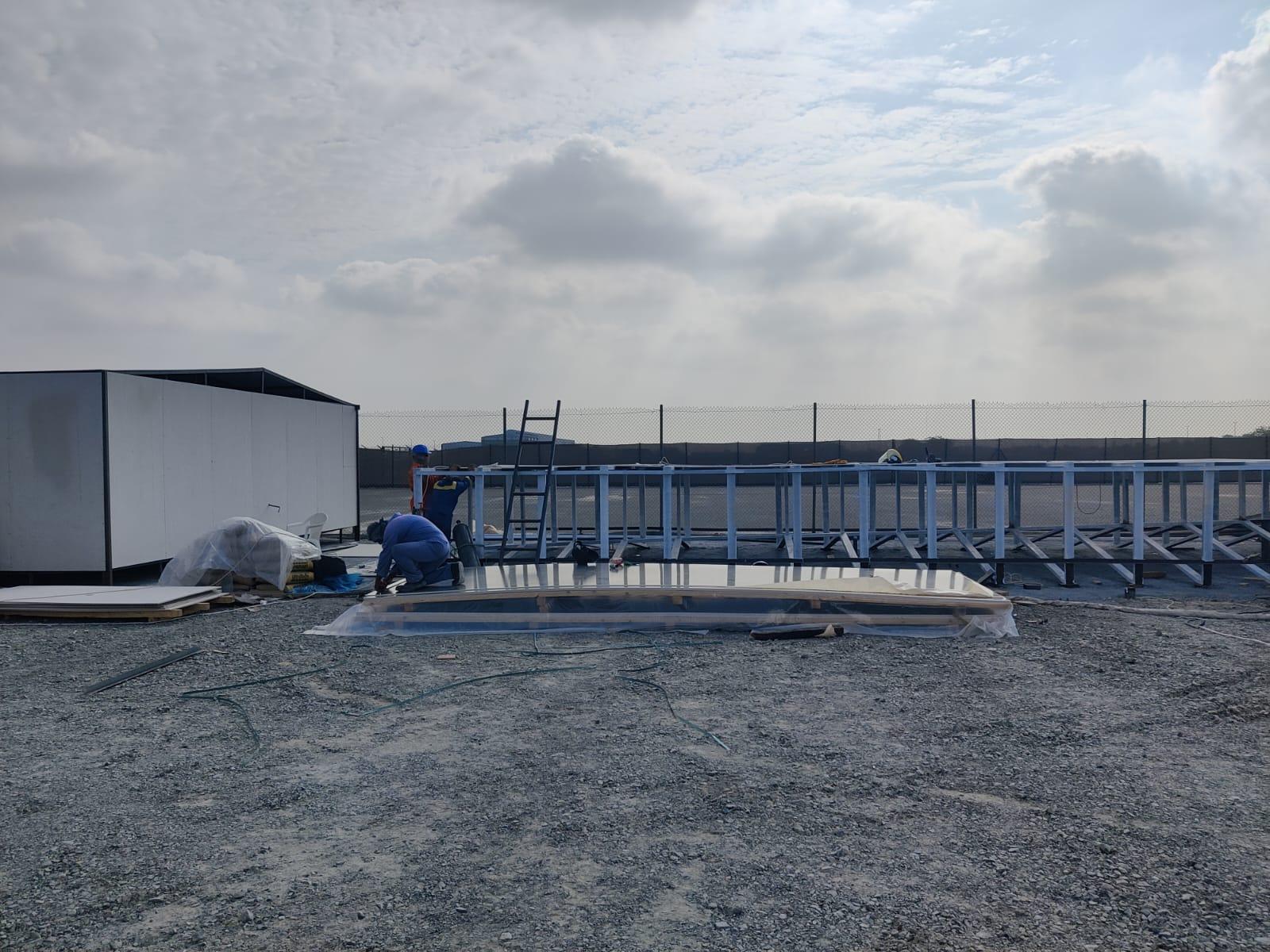
Marine transportation plays an important role in moving heavy cargo, equipment, raw materials, and industrial goods across rivers, coastal waters, ports, and offshore areas. As global trade continues to expand, the demand for reliable and efficient marine transportation solutions is also increasing. According to UN Trade and Development (UNCTAD), global maritime trade reached around 12.3 billion tonnes in 2023, showing the enormous importance of sea-based transportation to the global economy.
A modern barge building company plays an important role in meeting this demand by developing vessels that can handle heavy loads, challenging marine conditions, and different types of industrial operations. Modern barge construction is no longer limited to building simple floating platforms. Today, engineering, material selection, digital design, safety systems, and operational requirements all influence how a barge is designed and constructed.
Why Barges Are Important for Marine Transportation
Barges are widely used for transporting heavy and oversized cargo that may be difficult or expensive to move through conventional transportation systems. Depending on their design, barges can carry construction materials, machinery, containers, bulk cargo, and industrial equipment.
Their large deck areas and high cargo capacity make them useful for port operations, offshore projects, construction activities, dredging work, and inland waterways. Some barges are also developed for specialized marine operations where a conventional cargo vessel may not provide the required flexibility.
More than 80% of the volume of international trade in goods is transported by sea, according to UNCTAD. This highlights why dependable marine transportation equipment remains essential for international commerce and industrial development.
Modern Barge Design and Engineering
One of the biggest developments in barge construction is the use of advanced engineering during the design stage. Computer-aided design and digital modelling allow engineers to study the vessel's dimensions, structure, stability, weight distribution, and expected operating conditions before physical construction starts.
A modern barge must be designed according to its intended application. A cargo barge may require a large open deck and high load-carrying capacity, while an offshore support barge may require additional equipment, reinforced structures, accommodation facilities, or specialized working areas.
Important design factors generally include:
- Cargo capacity
- Hull dimensions
- Draft and freeboard
- Stability
- Structural strength
- Deck loading
- Operating environment
- Maintenance requirements
- Safety systems
- Equipment requirements
Careful planning during this stage helps improve vessel performance and can reduce construction problems later.
Aluminium and Lightweight Marine Construction
Material selection has a major influence on the performance, durability, and efficiency of a marine vessel. Steel is widely used for heavy-duty barge applications because of its strength and structural capabilities. Aluminium can also be suitable for applications where lower weight, corrosion resistance, and efficiency are important.
Modern aluminum barge builders consider several factors before selecting materials, including vessel size, expected cargo, operating environment, structural requirements, maintenance needs, and project objectives.
Reducing unnecessary vessel weight can provide practical advantages in certain applications. A lighter structure may require less energy to move and can potentially improve operational efficiency. However, material selection must always balance weight reduction with strength, durability, safety, and long-term reliability.
Safety in Modern Barge Construction
Safety should be considered from the earliest stage of vessel development. A barge carrying heavy equipment or cargo needs sufficient stability and structural strength to operate safely in its intended environment.
Modern barge designs can incorporate watertight compartments, reinforced structures, safe access areas, drainage arrangements, emergency equipment, communication systems, and other safety features.
Cargo distribution is another important consideration. Incorrect positioning of heavy cargo can influence the vessel's stability and create unnecessary operational risks. For this reason, engineers consider expected cargo weights and loading arrangements during the design process.
Safety does not end when construction is completed. Regular inspections, maintenance, corrosion protection, and equipment checks are necessary to keep a vessel in suitable operating condition throughout its service life.
Growing Demand for Specialized Barges in the UAE
The UAE has developed a strong maritime and logistics sector supported by major ports, coastal infrastructure, offshore activities, construction projects, and international trade. These activities create demand for marine vessels that can transport equipment and materials efficiently.
For this reason, barge builders in UAE need to consider the specific requirements of regional marine operations. Local operating conditions can include high temperatures, saltwater exposure, heavy industrial workloads, and demanding port or offshore activities.
A purpose-built barge can be designed around the project's exact requirements instead of relying on a standard configuration. This can include deck dimensions, cargo capacity, structural reinforcement, equipment installation, accommodation areas, and specialized working systems.
Technology Improving Barge Efficiency
Technology is transforming many parts of the marine construction process. Digital modelling allows engineers to identify potential design issues before construction begins. Modern fabrication methods can also improve dimensional accuracy and reduce material waste.
Monitoring technology can provide useful information about vessel performance, machinery condition, fuel consumption, and other operational parameters. This information can help operators identify maintenance requirements before minor problems become expensive repairs.
Energy efficiency is also becoming increasingly important. Optimized hull design, appropriate propulsion systems, efficient onboard equipment, and better weight distribution can contribute to improved vessel performance.
As environmental expectations increase, marine construction is also moving toward solutions that can reduce emissions and improve resource efficiency.
Customization for Different Marine Operations
Every marine project has different requirements, so a single barge design cannot meet every operational need. Customization allows a vessel to be developed according to its expected workload and working environment.
A construction project may need a reinforced deck capable of supporting heavy machinery. A cargo operation may require maximum deck utilization and high carrying capacity. Offshore projects may require cranes, support equipment, accommodation areas, or specialized working systems.
VU Marine provides marine construction and related services with a focus on practical vessel requirements. A properly planned vessel can provide better use of available space, improved operational efficiency, and greater safety.
Quality Control During Construction
Quality control is essential throughout the entire construction process. It begins with design verification and continues through material inspection, fabrication, welding, assembly, painting, equipment installation, testing, and commissioning.
Welding quality is particularly important because welded joints form a major part of many marine structures. Proper procedures, skilled workmanship, inspection, and testing help ensure structural reliability.
Before entering service, important systems and structural components should be carefully inspected and tested. Depending on the vessel's purpose, testing may include stability checks, equipment trials, watertightness inspections, machinery testing, and commissioning procedures.
Role of Aluminium in Modern Barge Manufacturing
Modern aluminium barge manufacturers focus on achieving an appropriate balance between weight, strength, durability, and operational requirements. Aluminium can offer useful advantages for selected marine applications because of its relatively low weight and natural resistance to corrosion.
However, successful aluminium construction requires proper engineering and fabrication techniques. Factors such as welding, structural design, material thickness, reinforcement, and corrosion management must be considered carefully.
The final material choice should always depend on the vessel's intended use rather than simply selecting a material because it is lighter. A properly engineered structure should provide the required strength and durability throughout its expected operating life.
Sustainability and the Future of Barge Construction
Sustainability is becoming an increasingly important consideration in marine transportation. Efficient vessel design can help reduce fuel consumption and operating emissions over the vessel's service life.
Material efficiency is also important. Reducing unnecessary waste during fabrication and using durable materials can help extend the working life of a vessel. Longer service life can reduce the need for frequent major reconstruction or replacement.
UNCTAD has projected continued growth in global maritime trade, with seaborne trade expected to expand at an average annual rate of around 2.4% between 2025 and 2029. This growth creates a continuing need for marine transportation solutions that can handle increasing cargo requirements while improving efficiency and environmental performance.
Future of Modern Barge Construction
The future of barge construction is likely to combine advanced engineering, digital technology, improved materials, better safety systems, and greater customization.
Digital design tools will continue to help engineers optimize structures before construction begins. Improved monitoring systems can provide more information about vessel performance, while efficient equipment can help reduce operational costs.
At the same time, safety will remain one of the most important priorities. Barges operate in environments where weather, water conditions, cargo loads, and operational requirements can change. Modern vessels therefore need to provide dependable performance under a wide range of conditions.
Conclusion
Modern barge construction is becoming more advanced as marine transportation requirements continue to evolve. Stronger structural designs, improved materials, digital engineering, safety systems, quality control, and energy-efficient technologies are all contributing to better marine transportation solutions.
A professional builder must understand not only how to construct a vessel but also how that vessel will be used in real-world marine operations. Proper planning, engineering, fabrication, testing, and maintenance can make a significant difference in safety, efficiency, and reliability.
With global maritime trade continuing to grow, barges will remain valuable for transporting heavy cargo and supporting construction, offshore, industrial, and port-related activities. VU Marine's marine construction experience reflects the broader movement toward reliable, efficient, and purpose-built marine transportation solutions.