
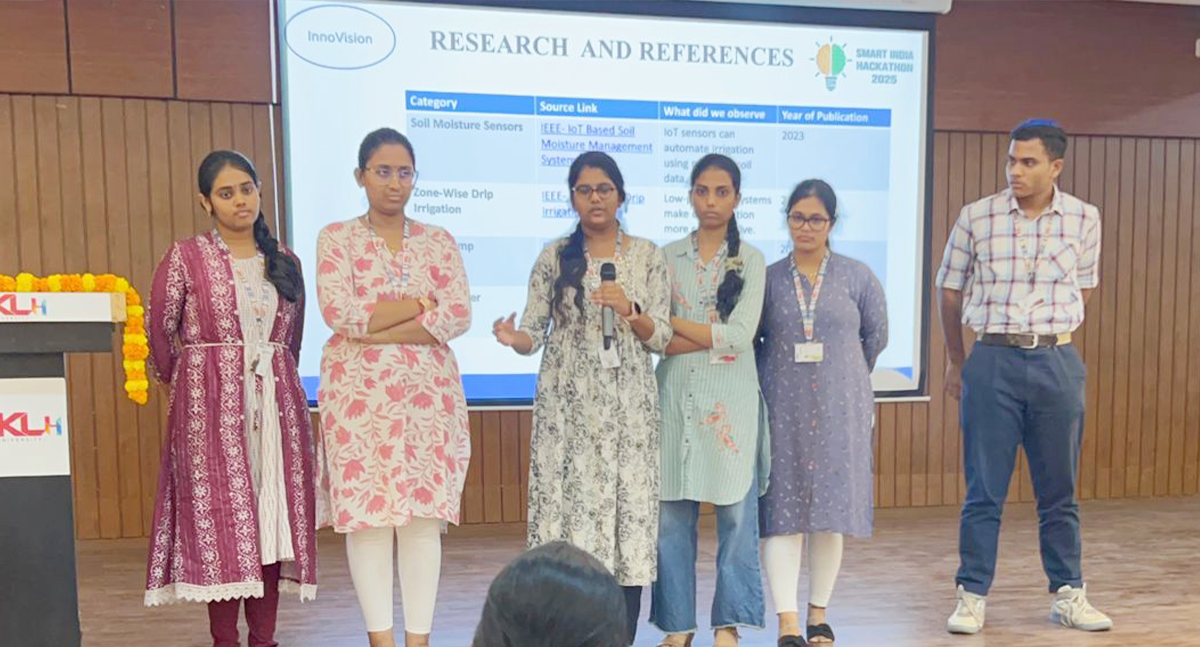
KLH Aziznagar, a constituent of KL University, is super elated to share that it's B.Tech CSE 2-year students have developed a smart agriculture model specially designed for the hilly regions. Hasini, Kummetha Samyukthaa Reddy, V. Nada Bindu Laxmi Sahithi, Konyala Likitha, Mohammed Kashif, and Gotlur Parnika come together to create a simple, technology-based solution that helps farmers take better care of their crops with less effort.
They understood farming and agriculture in India are a crucial sector, but it is extremely difficult in hilly areas, because:
- The land is uneven with steep slopes
- The weather is unpredictable
- Water does not spread evenly
- Soil often loses its nutrients
- Heavy machinery doesn't work properly on slopes
- Farmers have to walk long distances to manually check moisture, temperature, and pests
So they developed an IoT-based model that will use sensors while continuously studying the field. It will check all aspects like moisture, temperature, humidity, rainfall, and sunlight. If the soil becomes dry, the system automatically switches on irrigation. The water will flow through micro-drip, which can be used efficiently even on slopes. This ensures every part of the field gets the right amount of water. It also leverages AI to understand data and suggest which crops are most suitable for that particular hillside. It will also show the water needs, pest risks, and fertilizer schedules. This way, the farmers make informed decisions.
All this information is clearly displayed on the mobile dashboard, so the farmers can monitor their crops from anywhere. They will also get alerts and switch irrigation on or off manually whenever required.
This solution, developed by the students from one of the best universities in India, will have a meaningful impact. Water usage will be reduced by 30-40% and crops will grow better as they will get balanced nutrients. It is particularly useful for crops grown in hilly regions such as tea, apples, coffee, spices, and millet. This clearly highlights the students' innovations and how technology can make farming easier, more efficient, and sustainable.