
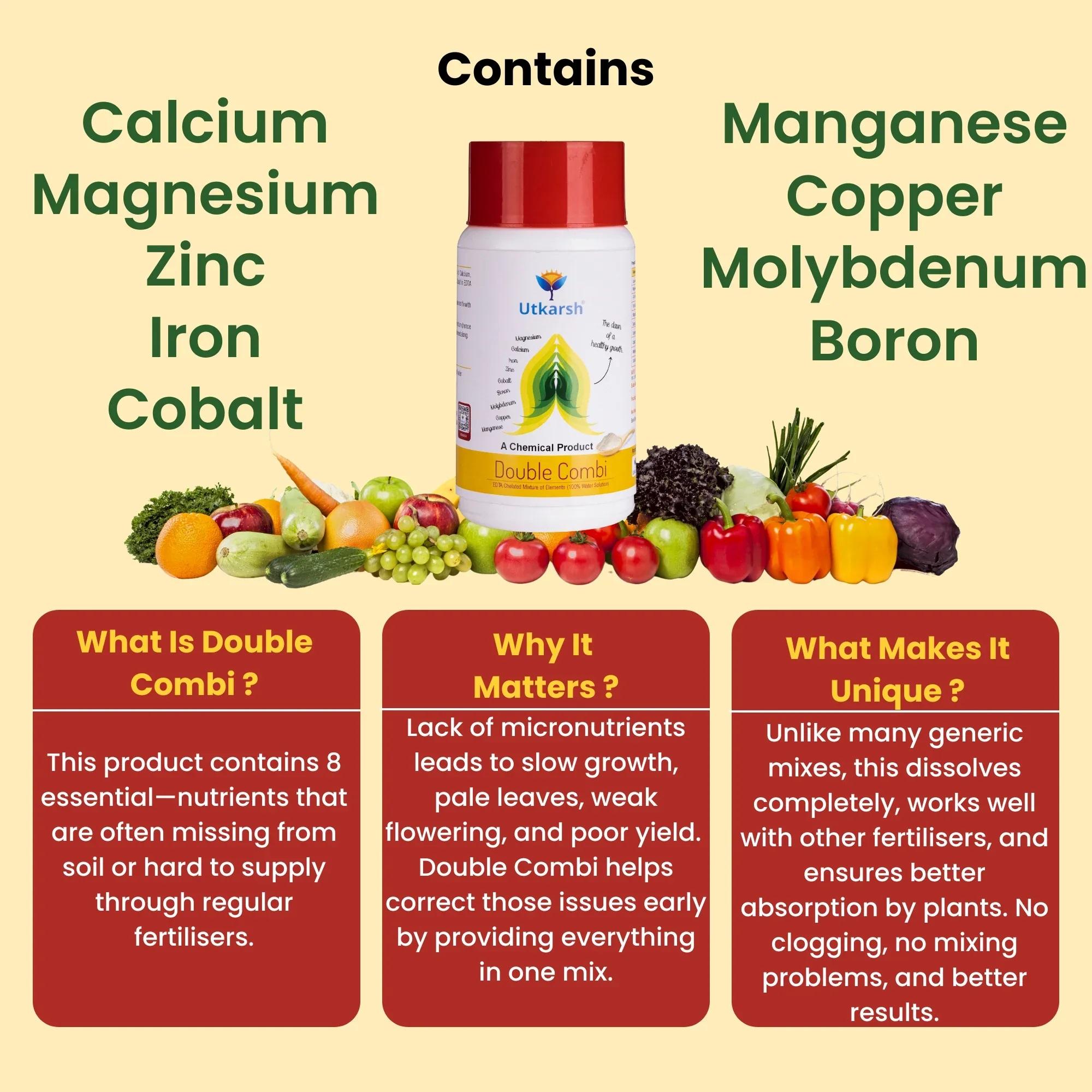
Modern agriculture depends not only on major nutrients like nitrogen, phosphorus, and potassium but also on essential micronutrients required in small quantities. Deficiencies of elements such as zinc, iron, manganese, and boron can significantly reduce crop yield and quality. Farmers often overlook these deficiencies because the symptoms may resemble other stress conditions. A reliable micronutrient deficiency solution ensures balanced nutrition and supports proper plant metabolism. Among the available options, a chelated micronutrient mix has become a preferred choice due to its higher efficiency and better absorption. This article explains how to identify and correct deficiencies and why chelated formulations offer a practical advantage in farming.
How to Fix Micronutrient Deficiency in Crops?
The question how to fix micronutrient deficiency? is crucial for maintaining consistent crop performance. The first step is proper diagnosis, which includes observing visible symptoms such as yellowing leaves, stunted growth, or poor flowering. Soil testing provides accurate information about nutrient availability and helps avoid guesswork. Once the deficiency is identified, selecting the right nutrient source becomes essential.
Application methods play a key role in correction. Farmers can use soil application, foliar spray, or fertigation depending on crop stage and severity of deficiency. Foliar application often gives quicker results because nutrients are directly absorbed through leaves. It is also important to maintain proper soil pH, as extreme acidity or alkalinity reduces nutrient availability. Balanced fertilization and organic matter addition improve long-term soil health and prevent recurring deficiencies.
Role of Chelated Micronutrient Mix in Effective Nutrient Management
A chelated micronutrient mix is a specially formulated combination where micronutrients are bound with organic molecules known as chelating agents. This binding protects nutrients from reacting with soil components, which often makes them unavailable to plants. As a result, chelated nutrients remain soluble and easily absorbable even under challenging soil conditions.
Chelated formulations are particularly beneficial in alkaline soils where traditional micronutrient salts become ineffective. They ensure uniform distribution and reduce nutrient loss due to leaching or fixation. Farmers using chelated mixes often observe faster correction of deficiency symptoms and improved crop vigor. The consistency in nutrient availability also supports better root development and higher resistance to environmental stress.
What Is a Chelated Micro Nutrient Mixture?
The question what is a chelated micro nutrient mixture? refers to a scientifically designed blend of essential micronutrients like zinc, iron, copper, manganese, and boron combined with chelating agents such as EDTA or amino acids. These agents form stable complexes with nutrients, allowing them to remain available for plant uptake over a longer period.
Unlike conventional fertilizers, chelated mixtures prevent nutrients from forming insoluble compounds in the soil. This ensures that plants receive the required nutrients efficiently without frequent reapplication. These mixtures are widely used in horticulture, field crops, and protected farming systems. They are especially useful during critical growth stages such as flowering and fruit development, where nutrient demand is high and deficiencies can directly impact yield.
Benefits of Using Chelated Micronutrient Mix as a Micronutrient Deficiency Solution
Using a chelated formulation as a micronutrient deficiency solution provides multiple agronomic benefits. It enhances nutrient use efficiency, which means plants absorb a higher percentage of applied nutrients compared to traditional fertilizers. This reduces wastage and lowers overall input costs for farmers.
Key advantages include:
- Faster correction of visible deficiency symptoms
- Improved plant growth and uniform development
- Enhanced photosynthesis and enzyme activity
- Better resistance to stress conditions such as drought or salinity
- Increased crop yield and improved produce quality
Because chelated nutrients remain stable in the soil, they provide long-lasting effects and reduce the need for repeated applications. This makes them a practical and cost-effective solution for both small and large-scale farming.
Practical Application Tips for Farmers
To achieve the best results from a chelated micronutrient mix, farmers should follow correct application practices. The dosage depends on crop type, soil condition, and severity of deficiency. Overuse should be avoided, as excessive micronutrients can also harm plant growth.
For foliar spray, it is recommended to apply during early morning or late evening to maximize absorption and prevent evaporation. Mixing compatibility with other fertilizers or pesticides should be checked before application. Regular monitoring of crop condition helps in adjusting nutrient management practices effectively. Farmers can also consult reliable agricultural experts or trusted manufacturers like Utkarsh Agro for suitable product recommendations based on local conditions.
Common Signs of Micronutrient Deficiencies in Crops
Recognizing deficiency symptoms early helps prevent yield loss. Each micronutrient has specific functions, and its deficiency shows distinct signs. For example, zinc deficiency often causes shortened internodes and small leaves, while iron deficiency leads to yellowing between leaf veins.
Manganese deficiency results in pale leaves with green veins, and boron deficiency affects flower and fruit formation. These symptoms may vary slightly depending on the crop, but timely identification is essential. Regular field inspection combined with soil and leaf testing ensures accurate diagnosis and proper treatment using a suitable micronutrient solution.
Conclusion
Balanced crop nutrition is essential for sustainable farming and consistent productivity. Micronutrient deficiencies, though required in small amounts, can cause major losses if ignored. A well-planned micronutrient deficiency solution helps maintain plant health, improve nutrient uptake, and enhance overall crop performance. Among the available options, a chelated micronutrient mix offers superior efficiency due to its stability and better absorption. By understanding deficiency symptoms, applying nutrients correctly, and maintaining soil health, farmers can achieve higher yields and better quality produce. Proper micronutrient management is not an optional step but a necessary practice for modern agriculture.