
Bureau of Indian Standards (BIS) certification is one of the most important product compliance requirements in India. Businesses involved in manufacturing, importing, or selling regulated products must obtain BIS approval before introducing products into the Indian market. The certification ensures that products meet prescribed Indian quality, safety, and performance standards, helping protect consumers while maintaining product reliability.
Over the years, BIS certification has become mandatory for a wide range of products including electronics, electrical appliances, steel products, chemicals, toys, household goods, construction materials, automotive components, and industrial equipment. For manufacturers and importers, obtaining BIS certification is often a legal requirement before products can be sold, distributed, or imported into India.
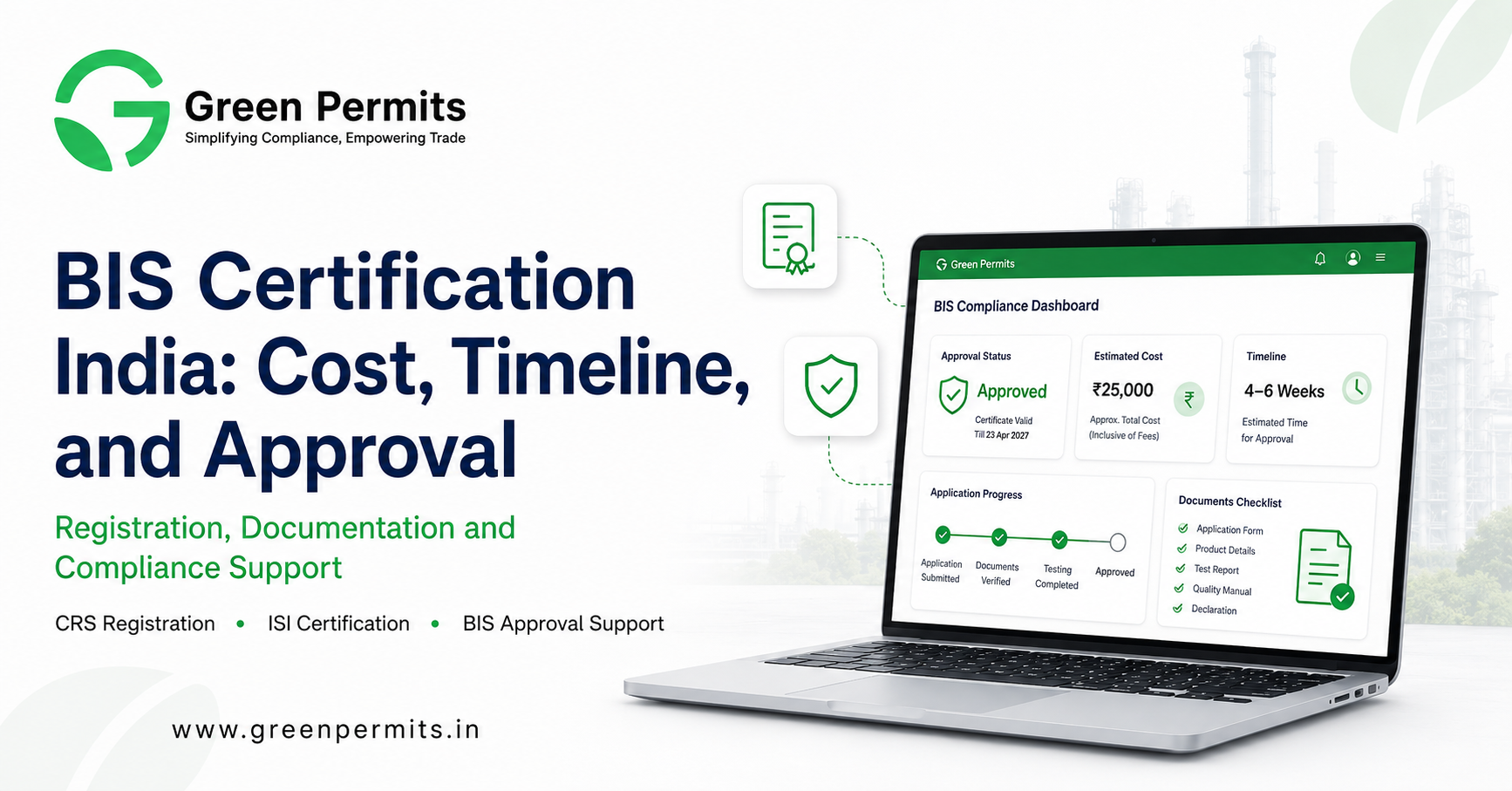
One of the most common questions businesses ask is about the cost, timeline, and approval process involved in obtaining BIS certification. Understanding these factors can help organizations plan product launches and market entry strategies more effectively.
What is BIS Certification
The Bureau of Indian Standards is India's national standards body responsible for developing standards and certifying products for quality and safety compliance.
BIS certification verifies that a product conforms to applicable Indian Standards (IS) and meets prescribed technical requirements. Depending on the product category, certification may be mandatory or voluntary.
For regulated products, BIS certification is compulsory before commercial sale or import into India. Products without the required approval may face customs clearance issues, market restrictions, penalties, or regulatory action.
The certification also helps manufacturers demonstrate product quality and build consumer confidence.
Why BIS Certification is Important
Product quality and safety have become major concerns for regulators and consumers. BIS certification helps ensure that products available in the market meet minimum safety and performance standards.
For manufacturers, certification provides legal compliance and market access. For importers, it is often necessary to clear shipments through customs and distribute products within India.
Apart from compliance benefits, BIS certification enhances brand reputation and demonstrates a commitment to quality standards. Many customers, government agencies, and procurement organizations prefer products that comply with BIS requirements.
As regulations continue to expand across product categories, BIS certification has become an essential part of doing business in India.
Types of BIS Certification
BIS operates multiple certification schemes depending on product type and manufacturing location.
The most common schemes include:
- ISI Mark Certification Scheme
- Compulsory Registration Scheme (CRS)
- Foreign Manufacturers Certification Scheme (FMCS)
- Hallmarking Scheme
- BIS Product Certification Scheme
Each scheme follows different procedures, documentation requirements, testing requirements, and approval timelines.
Selecting the correct certification route is one of the most important steps in the approval process.
BIS Certification Cost in India
The cost of BIS certification varies depending on several factors. There is no single fixed fee applicable to all products because costs differ based on product category, certification scheme, testing requirements, factory inspections, and regulatory fees.
The overall cost generally includes:
- Application fees
- Product testing charges
- BIS license fees
- Factory inspection expenses
- Audit costs
- Professional consulting fees
- Annual renewal charges
For domestic manufacturers, costs are typically influenced by product testing and licensing requirements. For foreign manufacturers, additional expenses may arise due to factory inspections and international coordination requirements.
Businesses should evaluate total compliance costs during project planning to avoid delays in product launches.
BIS Certification Timeline
The approval timeline depends on the certification scheme, product category, testing requirements, and document readiness.
For many products, the process begins with product testing in BIS-recognized laboratories. Testing duration varies depending on product complexity and applicable standards.
After successful testing, the application is reviewed by BIS authorities. Certain certification schemes may require factory inspections, technical evaluations, or additional verification procedures.
The overall timeline may vary based on:
- Product category
- Laboratory testing duration
- Completeness of documentation
- Factory inspection requirements
- Regulatory review process
Applications with complete documentation and proper planning generally move faster through the approval process.
Documents Required for BIS Certification
Preparing accurate documentation is one of the most important factors for obtaining timely approval.
The documents generally required include:
- Company Incorporation Certificate
- PAN Card
- GST Registration Certificate
- Manufacturing License
- Factory Address Proof
- Product Specifications
- Product Test Reports
- Manufacturing Process Details
- Quality Control Documents
- Trademark Documents (if applicable)
Additional documents may be required depending on the product category and certification scheme.
Proper documentation reduces the likelihood of delays and clarification requests during review.
BIS Certification Approval Process
The BIS certification process begins with identifying the applicable Indian Standard and certification scheme for the product.
Once the applicable requirements are identified, the product undergoes testing at a BIS-recognized laboratory. The test report confirms whether the product complies with the relevant Indian Standard.
After successful testing, the applicant prepares and submits the certification application along with supporting documents. BIS authorities review the application and evaluate technical compliance.
For certain schemes, factory inspections may be conducted to verify manufacturing processes, quality control systems, testing facilities, and production capabilities.
If the product and manufacturing facility meet all requirements, BIS grants certification and authorizes the use of the applicable BIS mark.
The certified product can then be legally sold, marketed, or imported into India.
Common Challenges During BIS Approval
Many businesses experience delays because of incorrect product classification, incomplete documentation, testing failures, or misunderstanding of applicable standards.
Manufacturers sometimes submit applications without identifying the correct certification scheme, resulting in additional review time and compliance issues.
Foreign manufacturers may also face challenges related to factory inspections, authorized Indian representatives, and technical documentation requirements.
Professional guidance helps businesses avoid these issues and improve approval efficiency.
Benefits of BIS Certification
BIS certification provides several advantages beyond regulatory compliance.
Certified products often enjoy higher market acceptance because consumers associate BIS approval with quality and safety. Certification also improves business credibility and supports participation in government tenders and institutional procurement opportunities.
Additional benefits include:
- Legal market access
- Improved product credibility
- Consumer confidence
- Regulatory compliance
- Reduced market risks
- Better brand reputation
For many businesses, BIS certification serves as both a compliance requirement and a competitive advantage.
Why Professional BIS Consulting Matters
The BIS approval process involves technical standards, product testing, documentation management, and regulatory coordination. Mistakes during the application process can increase timelines and costs.
Professional BIS consultants help businesses identify the correct certification route, coordinate testing, prepare documentation, respond to regulatory queries, and manage approvals efficiently.
This support is particularly valuable for importers, foreign manufacturers, startups, and businesses introducing new products into the Indian market.
Learn the Complete BIS Certification Process
Planning to obtain BIS certification for your product? Understanding approval requirements, testing procedures, certification costs, timelines, and compliance obligations is essential before starting.
Read the complete guide here:
👉 https://www.greenpermits.in/10/step-by-step-process-for-bis-isi-certification-in-india/
📞 Get Expert Assistance for BIS Certification
Need assistance with BIS Certification, CRS Registration, ISI Mark approval, FMCS certification, product testing coordination, or compliance documentation? The experts at Green Permits Consulting can guide you throughout the complete process.
🌐 Website: https://www.greenpermits.in
📞 Phone: +91 78350 06182
📧 Email: wecare@greenpermits.in