
Mastering speed & movement rhythm
Maintain a steady pace — avoid hitting top speed too early, as it’s easy to lose control.
Accelerate in stages — break the run into 3–4 segments, increasing speed slightly in each.
Decelerate smartly — slow down by 10–20% before tricky obstacles to ensure precision.
Look ahead – read the map in advance
Look 2–3 obstacles ahead — don't just focus on what's right under your character's feet.
Read patterns — rotating platforms, sliding pads, and cyclical obstacles → time your movements accordingly.
Memorize the layout — maps often reuse 20–30% of their structure; you'll get used to it with practice.
Jumping & landing techniques
Short vs. long jumps — use short jumps for narrow bridges and long jumps for wide gaps.
Angled landings — tilt slightly left or right to minimize sliding.
Jump-and-turn combos — use this when you need to change direction immediately after landing.
Mindset & reflexes
Don't panic when falling — stay calm to handle a bad landing.
Micro-adjustments — make slight directional tweaks instead of sharp turns.
Control your breathing — prevents hand jitters during fast-paced maneuvers.
15-minute daily training routine
- 5 minutes: practice short and long jumps.
- 5 minutes: practice moving platforms and timing.
- 5 minutes: full map runs, focusing on maintaining a steady pace.
Pro tips
Choose the safe route over the fast one — survival > speed.
Utilize platform edges — jumping from the very edge extends your distance by 10–15%.
Slow down before dense obstacle clusters — avoid going too fast ("over-speeding").
Practice in clusters — divide the map into 3–4 sections and practice each one individually.
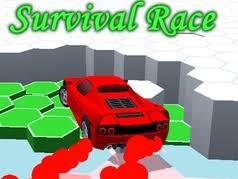
Detail: Survival race