
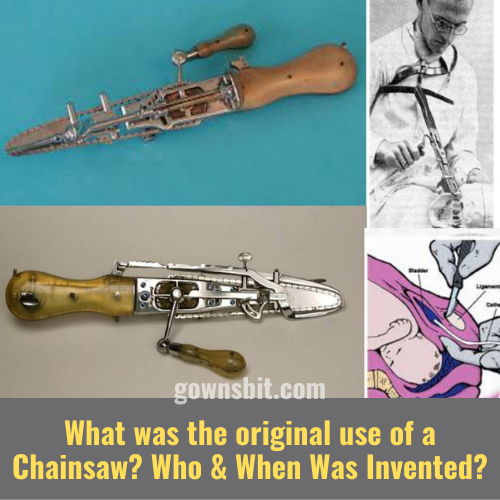
Many people associate chainsaws with cutting wood or trees, but few know the surprising answer to what was the original use of a chainsaw. Contrary to modern expectations, the chainsaw was not initially designed for forestry. Instead, it was developed for medical purposes in the late 18th century. This unusual origin highlights how tools can evolve dramatically over time to serve entirely different industries.
Early Invention and Medical Purpose
The first chainsaw-like device was invented by Scottish doctors John Aitken and James Jeffray. It was primarily used during childbirth procedures, specifically for symphysiotomy, a method that involved cutting bone to widen the pelvis when complications arose. Understanding what was the original use of a chainsaw reveals how medical science once relied on mechanical tools for surgical interventions.
Design and Functionality
The early chainsaw was quite different from modern versions. It featured a hand-cranked chain with small cutting teeth, designed to operate with precision rather than speed. The device allowed surgeons to perform procedures more efficiently compared to traditional manual tools like knives and saws.
Transition to Industrial Use
Adoption in Woodcutting
Over time, advancements in technology led to the transformation of chainsaws into tools for industrial and forestry use. By the 19th and early 20th centuries, larger and more powerful versions were developed for cutting timber. This shift marked a significant change from its original medical application to heavy-duty labor tasks.
Technological Improvements
With the introduction of gasoline engines and electric motors, chainsaws became more portable and efficient. These improvements made them essential tools for logging, construction, and even home maintenance. Despite these changes, the historical context of what was the original use of a chainsaw remains a fascinating aspect of its evolution.
Modern-Day Uses of Chainsaws
Today, chainsaws are widely used in various industries, including forestry, landscaping, and disaster management. They are designed for safety, speed, and durability, making them indispensable tools for professionals and homeowners alike.
Safety and Innovation
Modern chainsaws come equipped with advanced safety features such as chain brakes and anti-vibration systems. These innovations ensure user safety while maintaining high performance levels.
Conclusion
In conclusion, the answer to what was the original use of a chainsaw may surprise many. From a medical instrument used in childbirth procedures to a powerful tool for cutting wood, the chainsaw has undergone a remarkable transformation. Its history demonstrates how innovation can reshape the purpose of even the most unexpected inventions.