
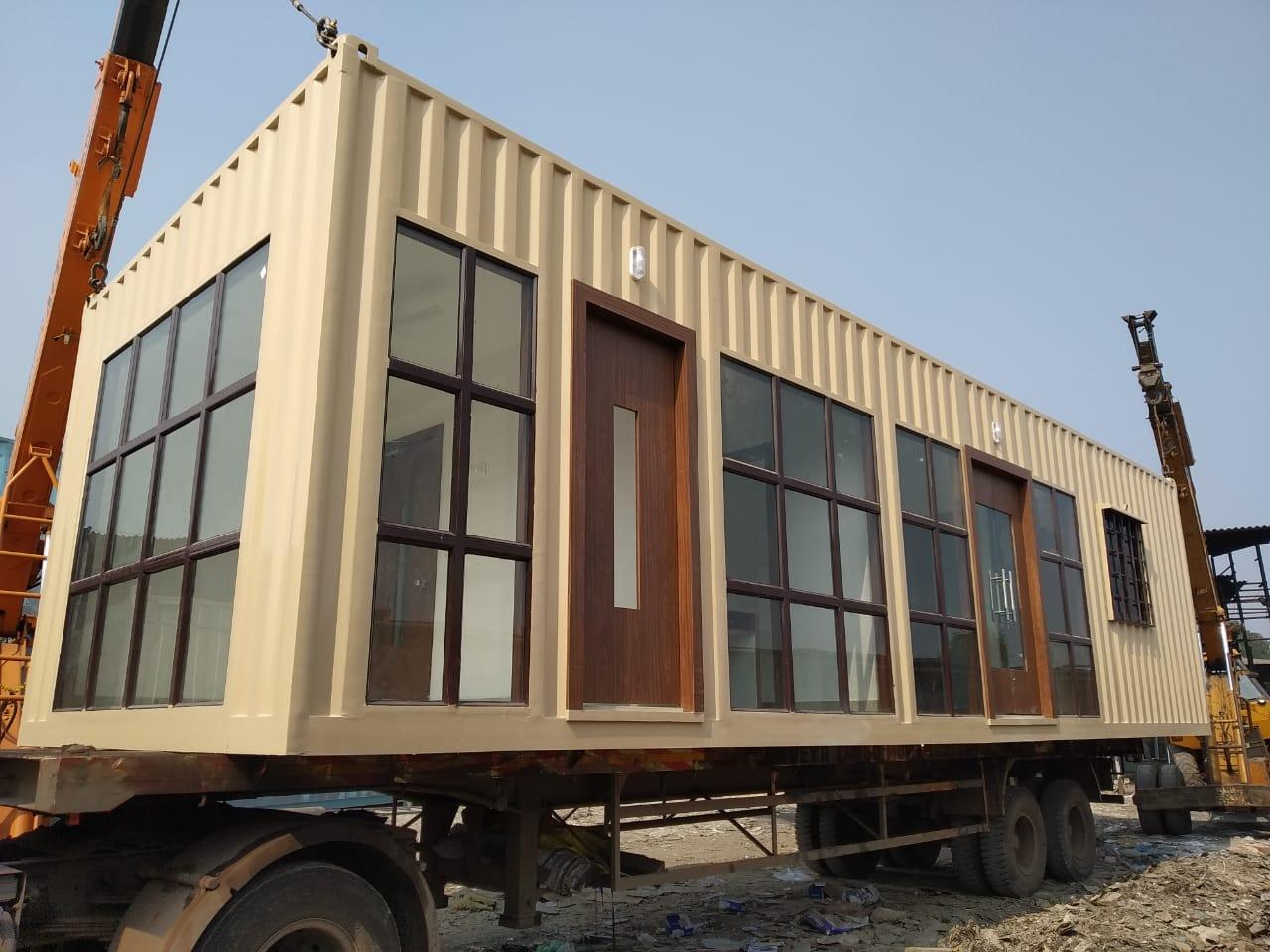
Not every workspace needs to be permanent. Projects end, sites change, and teams move on — but the need for a functional office during that time doesn't go away. This is exactly the gap that temporary office cabins are built to fill, giving businesses a working space that matches the actual duration of their need, instead of locking them into something built to last decades.
What Temporary Office Cabins Actually Solve
The word "temporary" doesn't mean unreliable or makeshift. Temporary office cabins are fully functional workspaces — complete with flooring, wiring, windows, and interiors — that are simply designed to be used for a defined period and then relocated or repurposed. They're built off-site in a factory, transported as ready units, and installed quickly wherever the work is happening.
This makes them ideal for situations where a permanent structure doesn't make financial or practical sense: a construction project with a fixed end date, an event that runs for a few weeks, or a business waiting for its permanent office space to be ready.
Why Businesses Choose Temporary Office Cabins Over Permanent Structures
The biggest reason is straightforward most projects have a shelf life, and spending on permanent construction for a short-term need rarely makes sense. Temporary office cabins let businesses match their spending to the actual duration of use. Once the project wraps up, the cabin can be moved to the next site instead of sitting unused or being demolished.
There's also the matter of speed. A permanent building can take months to plan and construct. Temporary office cabins, being factory-manufactured, are ready in a fraction of that time, which matters a great deal when a project timeline is already tight.
Built to Handle Real Working Conditions
A common concern is whether temporary office cabins can handle daily use the way a permanent office would. In practice, well-built cabins are designed for exactly this. Insulated walls keep the interior comfortable through summer heat and monsoon humidity. Flooring is chosen to withstand regular foot traffic. Electrical fittings are installed to standard safety codes, and window and door placements are planned for proper ventilation and light.
The result is a space that functions like a regular office day to day, even though it's designed with mobility in mind.
Flexibility That Matches Changing Needs
Projects rarely stay the same size from start to finish. A team might grow from five people to twenty, or a single office might need to split into separate cabins for management and staff. Temporary office cabins can be planned in modular units, meaning additional cabins can be added or removed as the team's requirements change, without disrupting the space that's already in use.
This adaptability is one of the main reasons this approach works so well for industries like construction, where team sizes and site layouts shift throughout a project's life.
Common Applications
Temporary office cabins are widely used at construction and infrastructure sites for project management teams, at mining and industrial sites where permanent structures aren't practical, at exhibition and event grounds for organiser offices, and by companies setting up a branch while a permanent office is still under construction. Government and disaster-relief operations also rely on them for quickly setting up administrative points in areas where speed matters more than permanence.
Even businesses running short pilot projects or seasonal operations find this approach useful. Instead of signing a long lease for a space that will only be needed for a few months, they can bring in a cabin, use it for the duration of the project, and move it out once the work is complete avoiding both the paperwork and the ongoing cost of a fixed lease.
What to Look For Before Choosing a Manufacturer
Before finalising temporary office cabins for your project, check how the cabin is insulated, what grade of steel or panelling is used for the frame, whether the electrical work meets safety standards, and how easily the unit can be dismantled and moved. It's also worth asking about after-sales support in case repairs or adjustments are needed once the cabin is on-site.
Temporary Office Cabins vs Renting Existing Space
Some businesses consider renting existing commercial space instead of opting for temporary office cabins, but the two solutions solve different problems. Rented spaces are tied to a fixed location and often come with long lease commitments, which doesn't help when a project site itself is temporary. This solution removes that constraint entirely you own or lease the unit itself, and it goes wherever your project goes, without being tied to any single building or landlord.
Frequently Asked Questions
How long can temporary office cabins be used at one location? There's no fixed limit cabins can stay in place for a few weeks or several years, depending on project needs, and can be relocated whenever the site changes.
Are they safe during heavy rain or strong winds? Yes, when manufactured to proper standards, these cabins are designed to withstand regional weather conditions, including monsoon rain and high winds.
Can multiple units be joined together? Yes, cabins can be arranged side by side or connected with covered walkways to create a larger, multi-room office setup.
Summary
Temporary office cabins offer a practical middle ground between doing without a proper office and investing in a permanent structure you may not need for long. They're quick to deploy, built to handle real working conditions, and flexible enough to grow or shrink with your project. For businesses managing short-term sites or waiting on a permanent space, they remain one of the most sensible workspace solutions available.
portable office manufacturers, portable office cabin, office cabin