
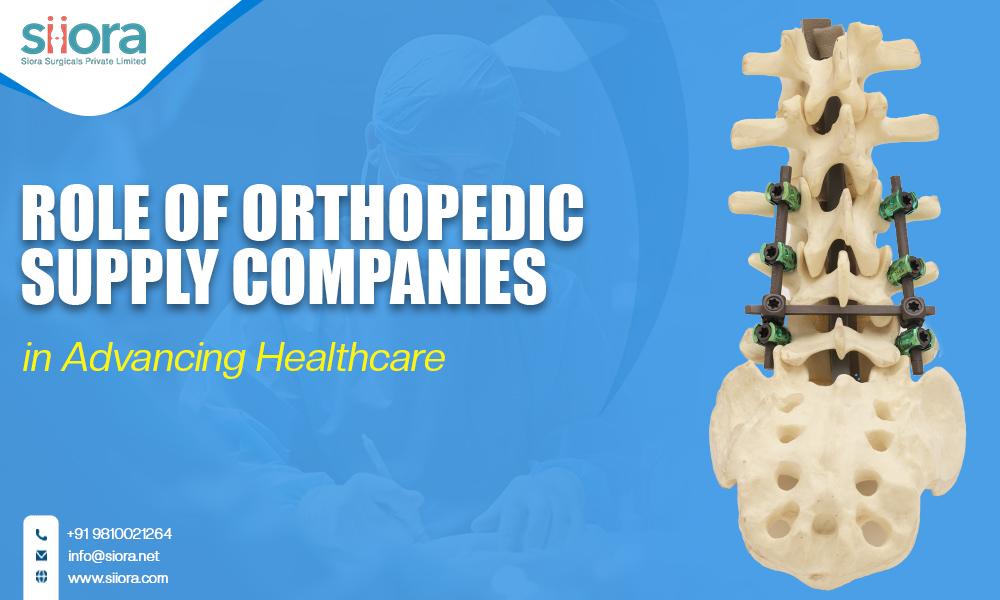
They're the hero in the sterile green scrubs, the one with the skilled hands who puts you back together. But have you ever stopped to wonder where all their high-tech tools and implants come from? That perfectly shaped titanium hip, that complex spinal cage, or that clever intramedullary nail—they don't just appear out of thin air. They come from orthopedic supply companies. And these companies are way more than just warehouses and delivery trucks. They are the unsung partners pushing modern healthcare forward.
They're More Than Just Sales Reps
It’s easy to think of these companies as just suppliers. A hospital orders a part, a rep drops it off. But that’s a tiny fraction of what they really do. At their core, these companies are massive research and development hubs. They spend millions of dollars and countless hours listening to surgeons. They go into operating rooms and watch procedures, identifying pain points and inefficiencies. A surgeon might say, "This old nail design doesn't stop the bone from twisting," or "I don't have a good way to fix a fracture in this specific, tricky spot." The company's engineers take that feedback and go back to the drawing board.
The Engine Room of Innovation
This partnership between surgeons and engineers is where the magic happens. It’s the engine that drives almost every major advancement in orthopedics. That’s how you get breakthroughs like the Intertan nail, with its clever interlocking screws that solve the problem of rotational instability. It’s how the Multifix nail was born, giving surgeons the tools to piece together a shattered tibia like a jigsaw puzzle. And it’s the force behind the rise of 3D-printed, custom-made implants that are designed to fit your unique anatomy perfectly. These companies are constantly competing to build a better, stronger, and more effective solution. That competition benefits everyone, especially the patient on the operating table.
School for Surgeons: Training and Support
You can't just invent a revolutionary new implant system and toss it over the fence to surgeons with a simple instruction manual. These new devices are complex, with specialized instruments and techniques. A huge, and often overlooked, role of orthopedic companies is education. They run sophisticated training programs for surgeons, often in "bioskills labs" where surgeons can practice the new technique on cadavers before ever using it on a live patient.
Furthermore, their sales reps are highly trained technical experts. They are often standing right there in the operating room, not to sell, but to act as a resource for the surgical team. They ensure the right components are available and can troubleshoot if the surgeon runs into an unexpected challenge. This level of support is critical for patient safety and ensures that the technology is used exactly as it was designed.
The Logistical Masters
Finally, don't underestimate the sheer logistical wizardry these companies pull off every single day. A single surgery can require hundreds of individual components—the implant, screws of various lengths and diameters, specific drill bits, guides, and instruments. The company is responsible for getting that complete, sterile kit to the right hospital for the right patient at the exact right time. It's a massive "just-in-time" inventory system that saves hospitals from having to stock millions of dollars in hardware.
The next time you hear about a groundbreaking orthopedic surgery, remember the team behind the surgeon. The engineers, the trainers, and the logistics experts at orthopedic supply companies are the silent partners in the background, constantly innovating to help you heal faster and better.