
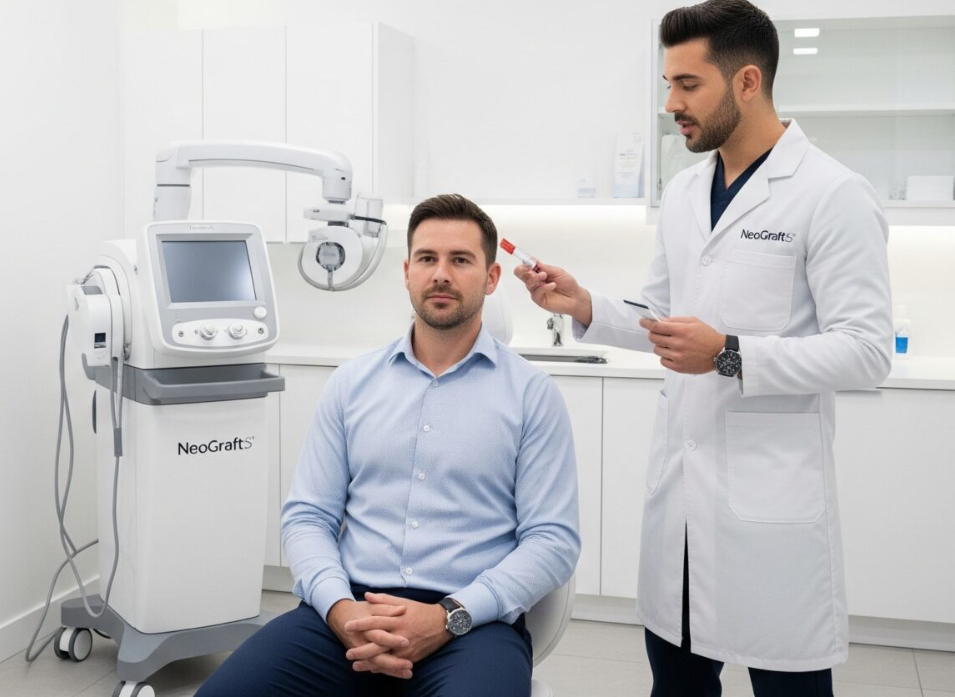
A neograft hair transplant is often discussed as a modern option for people who want to address hair loss with a minimally invasive approach. At its core, it uses follicular unit extraction, which means individual hair follicles are removed from a donor area and placed where thinning or balding is more noticeable. The method is valued for its precision, but it still follows the same basic principle as other transplant procedures: moving healthy follicles to areas that need more coverage.
People often look into this procedure when hair thinning begins to affect appearance and confidence. The decision usually depends on several factors, including the extent of hair loss, the quality of donor hair, and the long-term pattern of thinning. It is not a quick fix, and the results depend on both the skill of the medical team and the natural behavior of the transplanted follicles after healing.
One reason the procedure gets attention is the way follicles are extracted. Since each graft is taken separately, the approach may leave tiny dot-like marks rather than a linear scar. Recovery time can still vary from person to person. Some people return to routine activities quickly, while others need a longer period before the scalp feels fully settled. Temporary redness, swelling, and mild tenderness are common in the early phase.
The timeline for visible growth also matters. New hairs do not usually appear immediately after treatment. In many cases, the transplanted hair sheds first before entering a new growth cycle. That part can be discouraging for people who expect instant change, but it is a normal stage in the process. Over time, the transplanted follicles may begin producing hair that blends more naturally with the surrounding area.
It is also important to keep expectations realistic. A transplant can improve density in targeted areas, but it does not stop future hair loss in untreated regions. That is why some people continue to monitor scalp health and follow medical advice after the procedure. Understanding the limits of treatment can be just as important as understanding the procedure itself.
For anyone researching options, the main value of learning about a hair transplant is knowing what the treatment can and cannot do, how recovery works, and what results may reasonably look like over time.